
GroundK managed the entire ground transportation operation for the 2026 Coupang Play Series, covering all squad transfers for the visiting European clubs as well as all movement for the tournament headquarters and broadcast rights agency. The project ran 62 days, from the initial site inspection through to post-event recce work for the next tournament, with 70 dispatches, 642 seats, 5 vehicle types, and 5 transport operators coordinated through a single T-RiseUp PMS console.
One event, two entirely different operating logics
The 2026 Coupang Play Series was a two-match tournament held at Seoul World Cup Stadium. But the project GroundK actually ran was considerably larger than that. Two dispatch groups, the squad line and the tournament HQ line, operated under the same project code yet followed completely different logic.
The squad operation was a precision game: 45-seat coaches moving on a minute-by-minute schedule. Official training slots, match-day routing, and kit truck unloading windows all had to align. A single slip anywhere in that chain puts the entire match-day preparation at risk. The tournament HQ line, by contrast, was a flexibility game: vehicles committed for 48 days with destinations often unconfirmed.
The two lines required different vehicle types, different contract structures, different transport partners, and different lead times. GroundK separated them into distinct groups under the same project code and managed each accordingly.
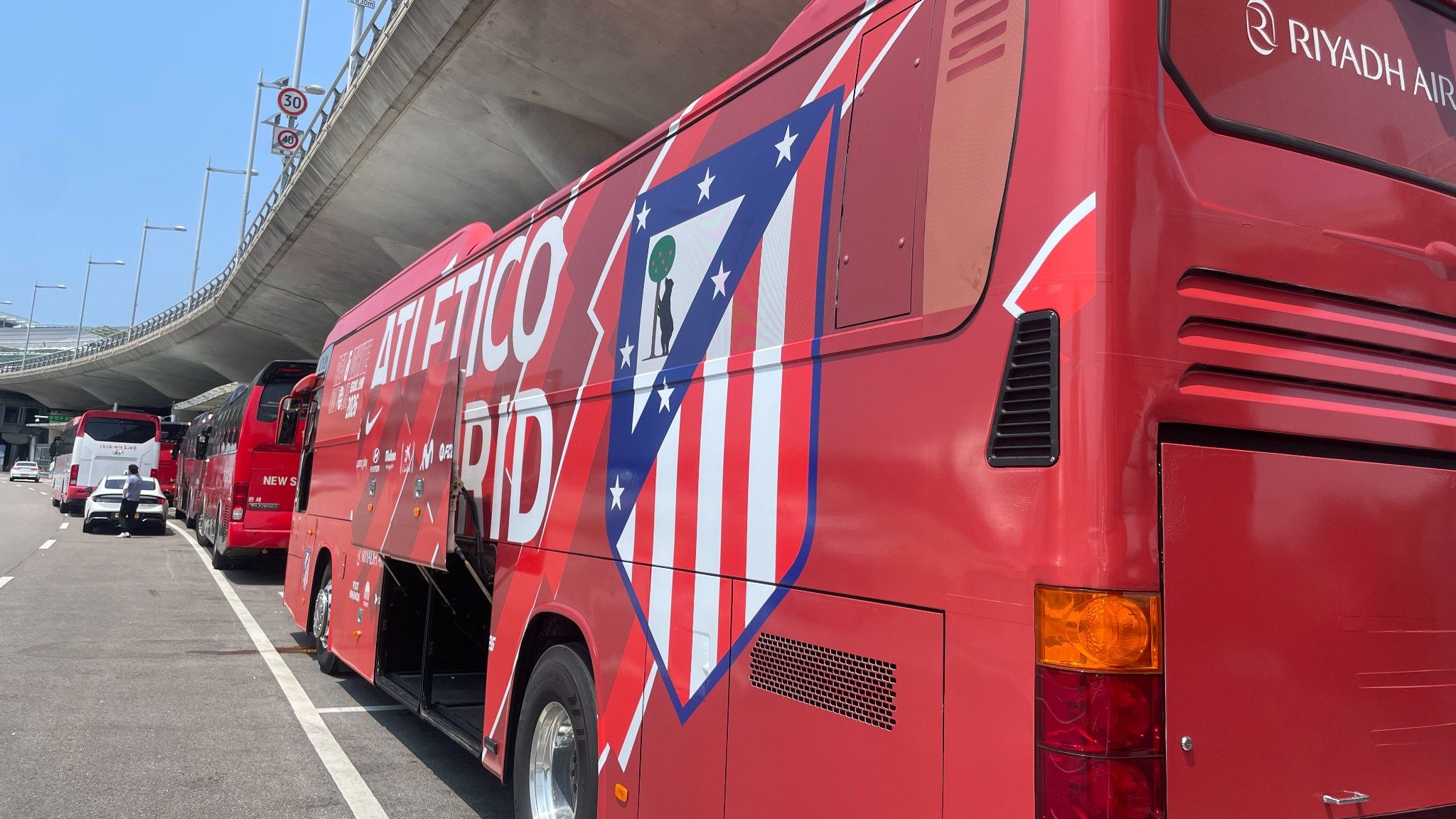
Overall scale: 70 dispatches, 642 seats, 5 vehicle types
The numbers tell you what kind of ground transportation operation this actually was.
70 dispatches total, covering 642 seats
5 vehicle types: 30 minivans, 22 minibuses, 11 large coaches, 6 luggage trucks, 1 executive sedan
5 transport operators: GK_VAN (in-house), Air Drive, Pyeonghwa Tourism, Jjim Moving, and Cheongdam Limousine
63 stops in total
62-day operation: from the first site inspection on 24 June through the next-event recce on 24 August
The peak window was 6-9 August, just four days, during which 48 dispatches (69% of the total) were concentrated. Large-scale sports events compress the bulk of their ground transportation demand into the final days before and during competition. The remaining 22 dispatches were spread across the other 58 days, which focused on site inspection support and on-site staffing.
Squad line: seven vehicles at the same gate, same time, on 6 August
The squad line (42 dispatches, 586 seats) hit its peak the moment the squad arrived at Incheon International Airport Terminal 1 on 6 August. At the same time, seven vehicles from three different operators lined up at the same gate.
Two 45-seat large coaches (main squad groups A and B)
One 20-seat large coach (coaching staff and club management)
Two minibuses seating 8 and 5 (directors group)
One 3.5-ton and one 5-ton luggage truck (squad kit and equipment)
Pyeonghwa Tourism supplied the large coaches, Air Drive the minibuses, Jjim Moving the trucks. Three separate operators, one pickup time, one gate, one destination. That level of precision cannot be achieved by coordinating each operator individually. It was possible because T-RiseUp PMS had all seven vehicles on a single dispatch board.
The operation moved equipment as well as people. Six luggage truck runs handled squad kit and gear on a separate line, managed within the same system and on the same schedule. Putting squad coaches and kit trucks on a single dispatch board is the only way to guarantee both depart from the same gate at the same time and arrive at the designated team hotel together.
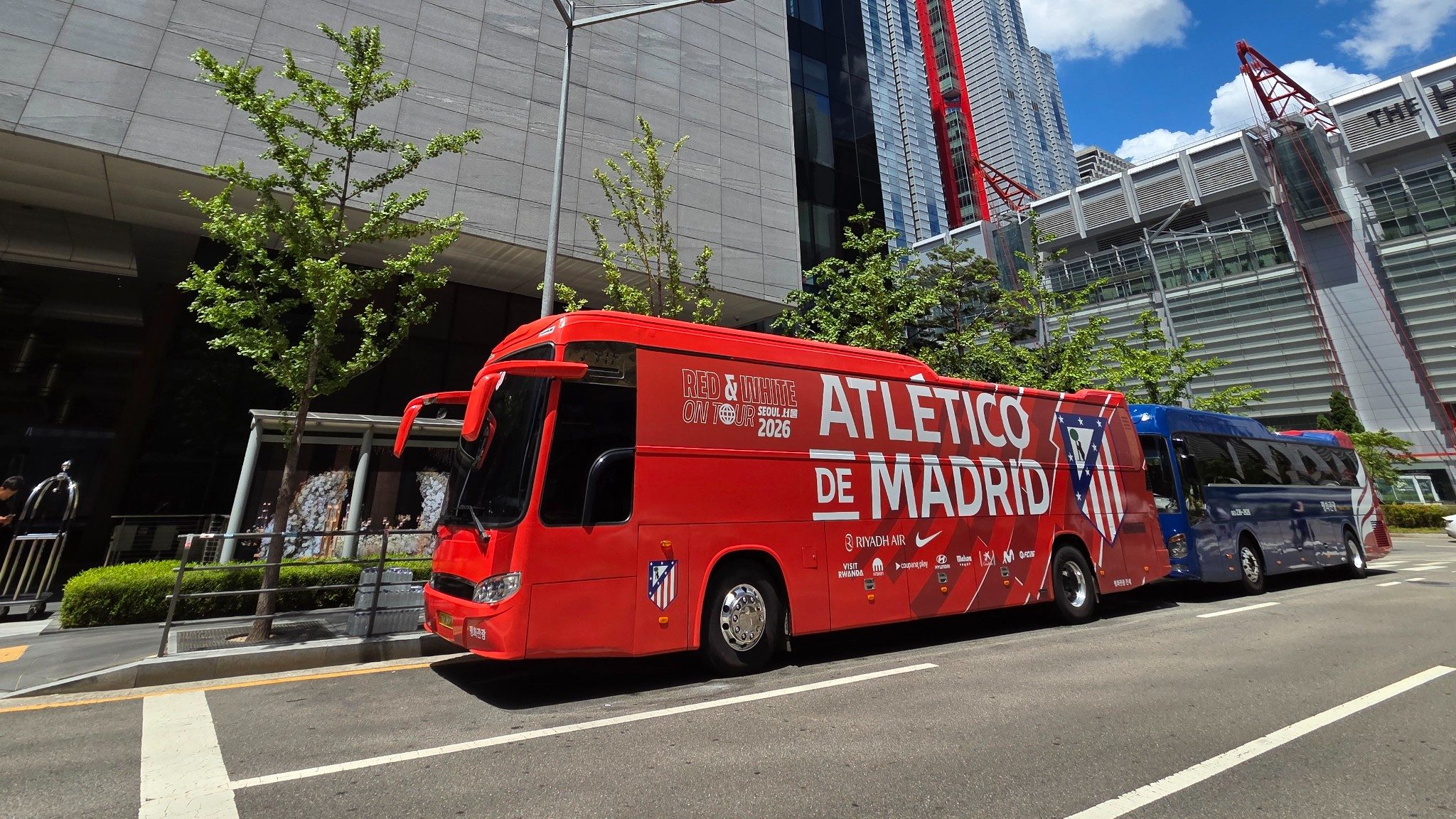
Vehicle type and operating approach varied by group profile
Not everyone on the squad line travelled the same way. GroundK tailored vehicle type and operating format to each group's specific profile.
VVIP (senior club officials): early-morning arrival, individual meet-and-greet, one-way executive sedan to minimise exposure. Dedicated limousine operator assigned.
Main squad: two fixed 45-seat large coaches to maintain security routing and on-time performance.
Coaching staff and club management: separate schedule from the squad, so a dedicated 20-seat coach.
Directors group: headcount varied between 8 and 12, requiring two flexible minibuses with re-configurable seating.
Media and press: different hotel and different itinerary; handled on an on-demand hourly charter basis.
Sponsor group: daily minibus charter aligned to training facility visit programme, including a leg to Seongnam FC's clubhouse.
Kit and equipment: dedicated luggage truck line, with gate assignment managed through the departures level at the airport.
On the evening of 7 August, four minibuses departed simultaneously for an official dinner. That dispatch was confirmed 6.4 hours before pickup. The VVIP executive sedan was confirmed 7.9 hours out. Across the squad line's 42 dispatches, 7 were booked within 24 hours of pickup. Same-day confirmations are not anomalies in large sports events. They are a normal part of operations.
HQ line: 43% of dispatches had no confirmed destination
The tournament HQ line (21 dispatches, 49 seats) was the mirror image of the squad line. This group covered the host organisation, the event agency, and the global broadcast rights agency. The operational window ran from 24 June to 10 August, 48 days, far longer than the squad's peak period.
Of the 21 dispatches, 9 had destinations listed as a broad area ('Seoul') or left unconfirmed. Meetings, site walkthroughs, and broadcaster discussions were often settled on the day, so vehicles were reserved before routing was known. That structure explains why only 2 vehicle types (minivan and minibus) were used and why in-house vehicles accounted for 95.2% of the line.
Confidentiality: site inspection routing, contract meetings, and broadcaster negotiations require minimal exposure.
Continuity: the same chauffeur staying with the group for 48 days allows operations to run without briefing new people each time.
Flexibility: dispatches with no confirmed destination are difficult to settle on billing terms when outsourced to third parties.
The global broadcast rights agency group was the core of this line. Starting with an inbound one-way transfer on 1 August and running through departure on 10 August, a fixed group of three had a dedicated minivan and chauffeur assigned for 7 consecutive days. The 8 August booking ran as an all-day charter starting at midnight (00:00). That is not vehicle supply. That is a dedicated mobility infrastructure service.
The shortest lead time on this line was 31.9 hours, and no booking came in within 24 hours. All 9 dispatches for the broadcast rights agency were entered into the system in a single batch on 28 July. Planned dispatches and flexible dispatches were handled together in the same system.
Four days of competition, 62 days of project
The project opened six weeks before the event, on 24 June, with an inbound transfer for the first site inspection team. A second recce followed around early July, four weeks out, with the inspection team visiting multiple venues by hourly charter as part of mega-event ground transportation preparation.
The project continued after the event concluded. On 18 and 19 August, the first recce dispatches for the next tournament were logged. A second recce followed on 23 and 24 August. This was the window where delivering on one event directly converts into winning the next.
Watching from the stands on match day, you would never see these 62 days. But GroundK's dispatch records capture every one of them. Managing everything from the initial site inspection through the event itself and into planning for the next one as a single continuous project is what ground transportation for major sports events actually looks like.
What the two lines reveal, side by side
Placing the squad line and the HQ line next to each other makes one thing clear: two groups working the same event can require completely different dispatch logic.
Squad: 42 dispatches, 586 seats, 5 vehicle types, 5 operators, 7 bookings within 24 hours, shortest lead time 6.4 hours
HQ: 21 dispatches, 49 seats, 2 vehicle types, 2 operators, 0 bookings within 24 hours, 95.2% in-house, 43% with unconfirmed destinations
Forcing the same management approach onto both lines guarantees that one of them will break. T-RiseUp PMS kept both groups under the same project code while running each on its own logic. Five vehicle types, five operators, and 70 dispatches all moved through a single control point, from contracting through dispatch, amendments, and billing.
17 dispatches logged with no confirmed destination. 7 dispatches finalised hours before pickup. An all-day charter starting at midnight. These are exactly the scenarios that generate billing disputes when managed by spreadsheet and phone. The system absorbed that uncertainty without friction, and that is why operations ran cleanly.
What GroundK has built through mega-event ground transportation is not a fleet count. It is an operational methodology for taking the complex, unpredictable dispatch logic that surfaces repeatedly in the field and handling it systematically. That accumulated experience is also what T-RiseUp PMS was built on.