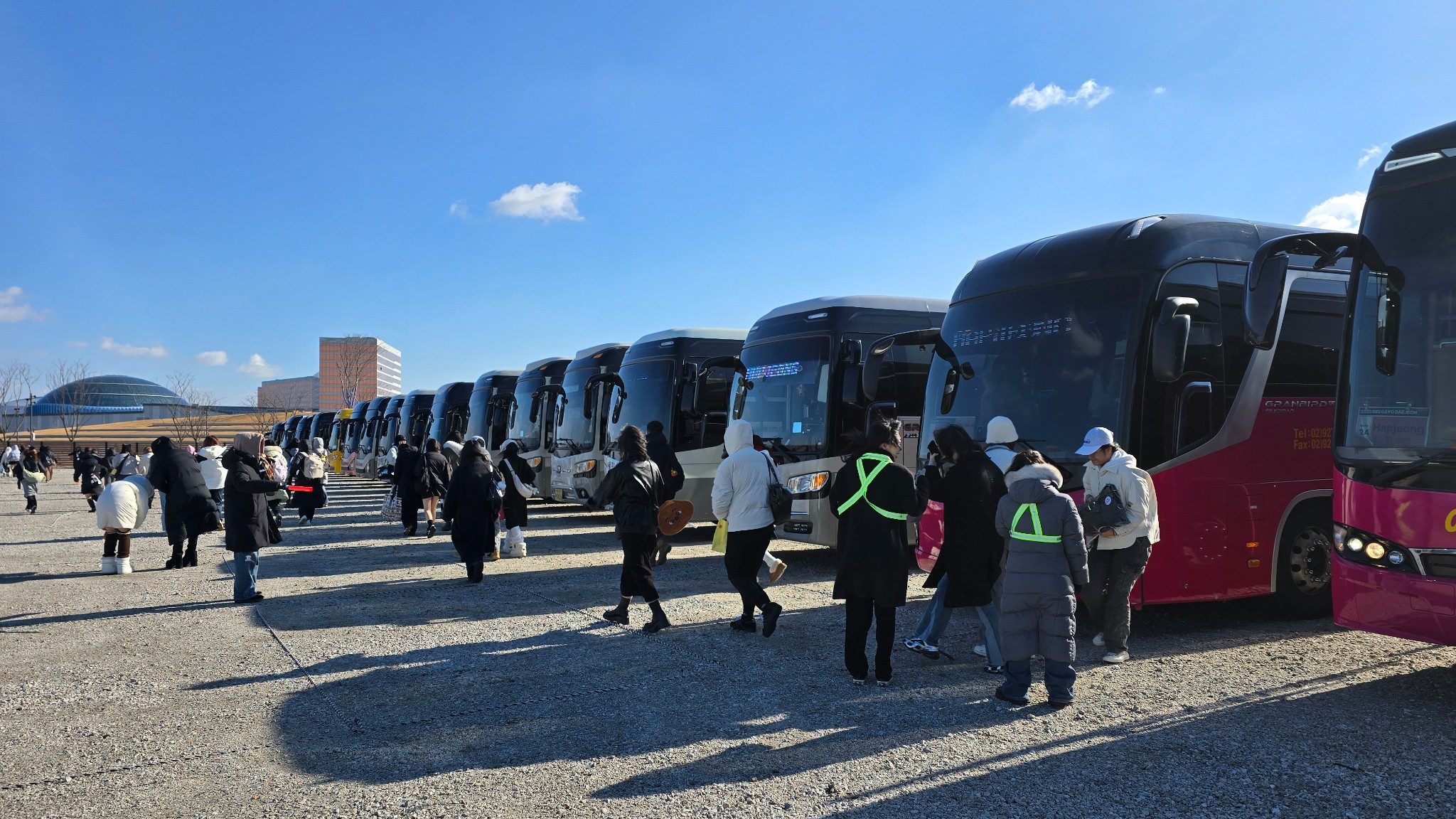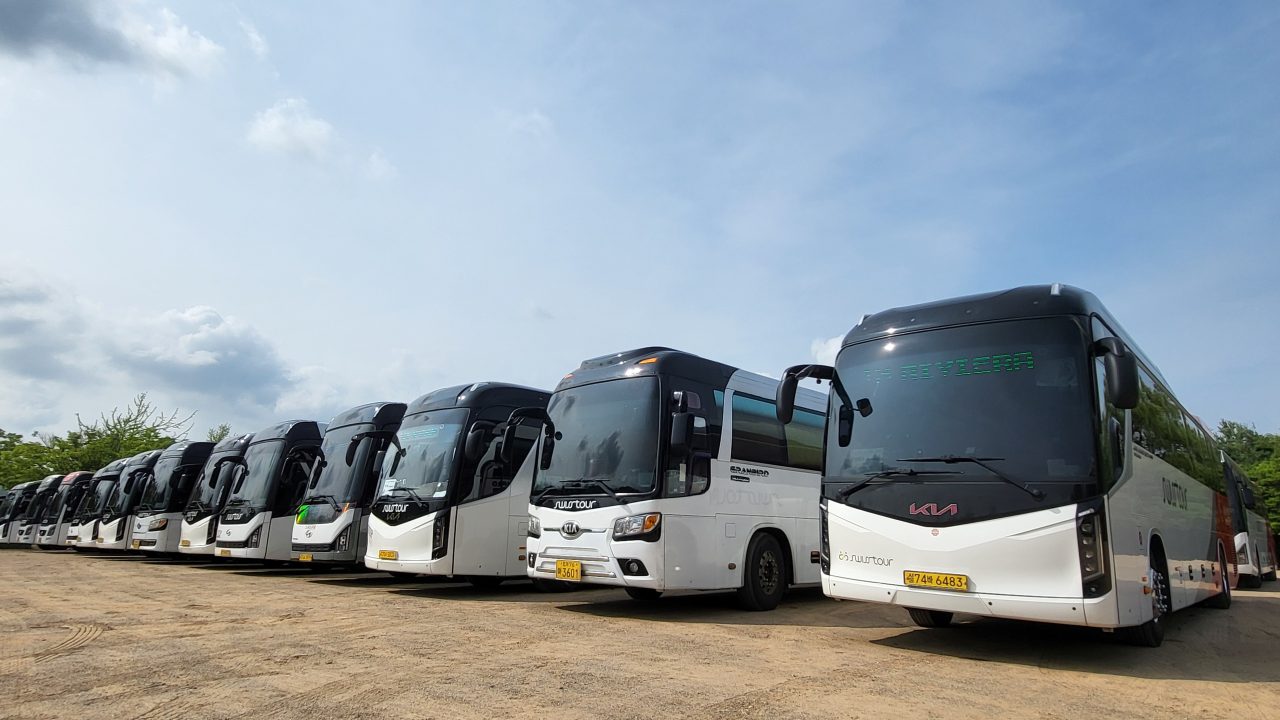
During MSI 2026 Finals Week, Ground K handled all ground transportation centered on the Daejeon Convention Center, including individual VIP chauffeuring, show match shuttles, and large-scale group transfers. Twelve minivans, twelve minibuses, and seven coaches supplied by three carriers produced 31 dispatch jobs in total, all managed through a single T-RiseUp PMS platform with one point of contact.

About MSI 2026
The MSI (Mid-Season Invitational) is one of League of Legends' two annual international championships, bringing together top teams from every major regional league. The 2026 edition ran from June 28 through July 12 at Hall 2 of the Daejeon Convention Center (DCC). The finals show match featured ten retired legendary players split into Team Baron and Team Dragon, while a fan festa ran concurrently at Hanbit Square in Expo Science Park.
Ground K was responsible for VIP chauffeuring and shuttle operations during the finals week, from July 7 through 13.
One Event, Four Distinct Movement Plans
Ground transportation for a global esports event is never a single-route operation. MSI 2026 involved four distinct groups moving simultaneously: international legend players, co-streamers, show match talent, and production staff, each with different schedules and handling requirements.
Individual VIP chauffeuring (12 minivans) covered inbound legend players and co-streamers arriving from France, China, the United States, Vietnam, and elsewhere. Meeting points were assigned by counter (C, E, and A) at both Incheon Airport Terminal 1 and Terminal 2, with each flight tracked individually. Guests who had checked into Seoul hotels first were transferred directly from Seoul to Daejeon. Because many in this group had high privacy requirements, all vehicles were Ground K-owned and operated to maintain direct control over service quality.
Show match and co-streamer shuttles (12 minibuses) ran as full-day hires between the hotel and the Daejeon Convention Center. Talent needed to move multiple times each day for rehearsals and the main event, so vehicles were assigned by group to cut waiting time and minimize unnecessary exposure.
Group transfers (7 coaches) handled post-match return runs, official party transfers during finals week, and a group departure to Incheon Airport Terminal 2. This higher-volume work was assigned to partner carriers.
Staff shuttles (2 minibuses) were deployed as full-day hires for on-site operational personnel.
How 31 Dispatch Jobs Were Run Through a Single Platform
The most complex element of this project was the sheer variety of vehicle types, carriers, and dispatch formats involved. Ground K's own fleet handled the VIP chauffeuring; partner carriers managed the group minibus shuttles and coach transfers. Across all three carriers, 31 jobs (17 one-way transfers and 14 full-day hires) ran concurrently, with all bookings, changes, and billing processed in one place through T-RiseUp PMS.
Flight data management was central to this. Each dispatch record carried the flight number, arrival time, terminal, and counter assignment, allowing individual tracking of inbound flights from more than four countries. On July 9, four separate flights arrived within the same day. On July 13, four dispatches had to depart simultaneously while regular shuttle rotations continued as normal. Handling that level of concurrency without dropping anything is exactly the problem an integrated dispatch system is built to solve.
VIP chauffeuring, where service quality demands direct control, stays in-house. High-volume group transfers go to partner carriers. Matching the right resource to the right job is what makes integrated management genuinely worthwhile.
Service Design by Guest Type: Same Event, Different Standards
The guests at a global esports event are not a single homogeneous group. With different nationalities, roles, and schedules in play, the transport arrangements and service standards had to be designed accordingly.
International legend players (France, China, USA, Vietnam, and others): Individual flight arrivals, multiple languages, high privacy sensitivity. One-way minivan chauffeuring, with gate-level airport meet-and-greet.
Co-streamers and content creators: Flexible movement tied to broadcast schedules. Full-day minibus hire with dedicated vehicle on standby.
Show match talent: Multiple daily moves for rehearsals and the main event. Full-day minibus hire with group-dedicated vehicle assignment.
General staff and crew: High-volume, time-definite transfers. One-way coaches and return shuttle runs.
Seoul-routed guests: Hotel pickup in Seoul with direct transfer through to Daejeon.
Key Takeaways from a Major Esports Event
Global esports events sit at the more demanding end of the MICE transportation spectrum. Guests arrive from many countries on staggered flights, talent schedules shift multiple times throughout the day, and it is not uncommon for a single event to require both one-on-one VIP chauffeuring and full coach transfers at the same time.
MSI 2026 Finals Week gave Ground K another opportunity to demonstrate how a multi-vehicle, multi-carrier operation can be run coherently through a single system. This project combined mega-event transfers and premium VIP chauffeuring within the same operational framework, and it stands as a useful reference for event organizers who need both scale and service quality from a single provider.