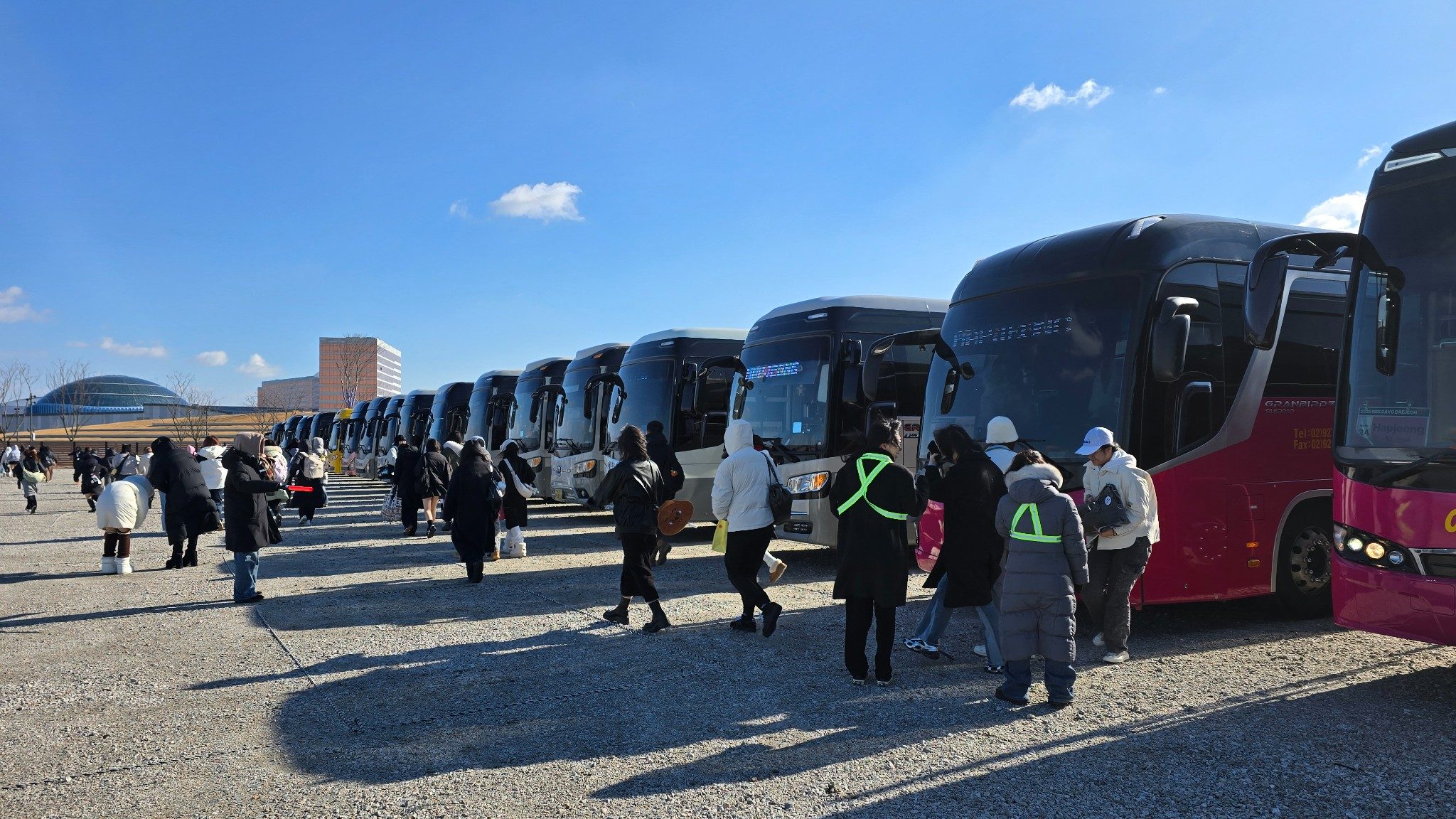
At NOL FESTIVAL, held at KINTEX Hall 2, GroundK developed a Seoul-based shuttle package sold directly alongside concert tickets. Over two days, the operation covered 1,554 reserved seats, 36 buses (19 on day one, 17 on day two), 2 departure points, and 4 return drop-off stops. Booking ran in Korean, English, and Chinese to accommodate international attendees.
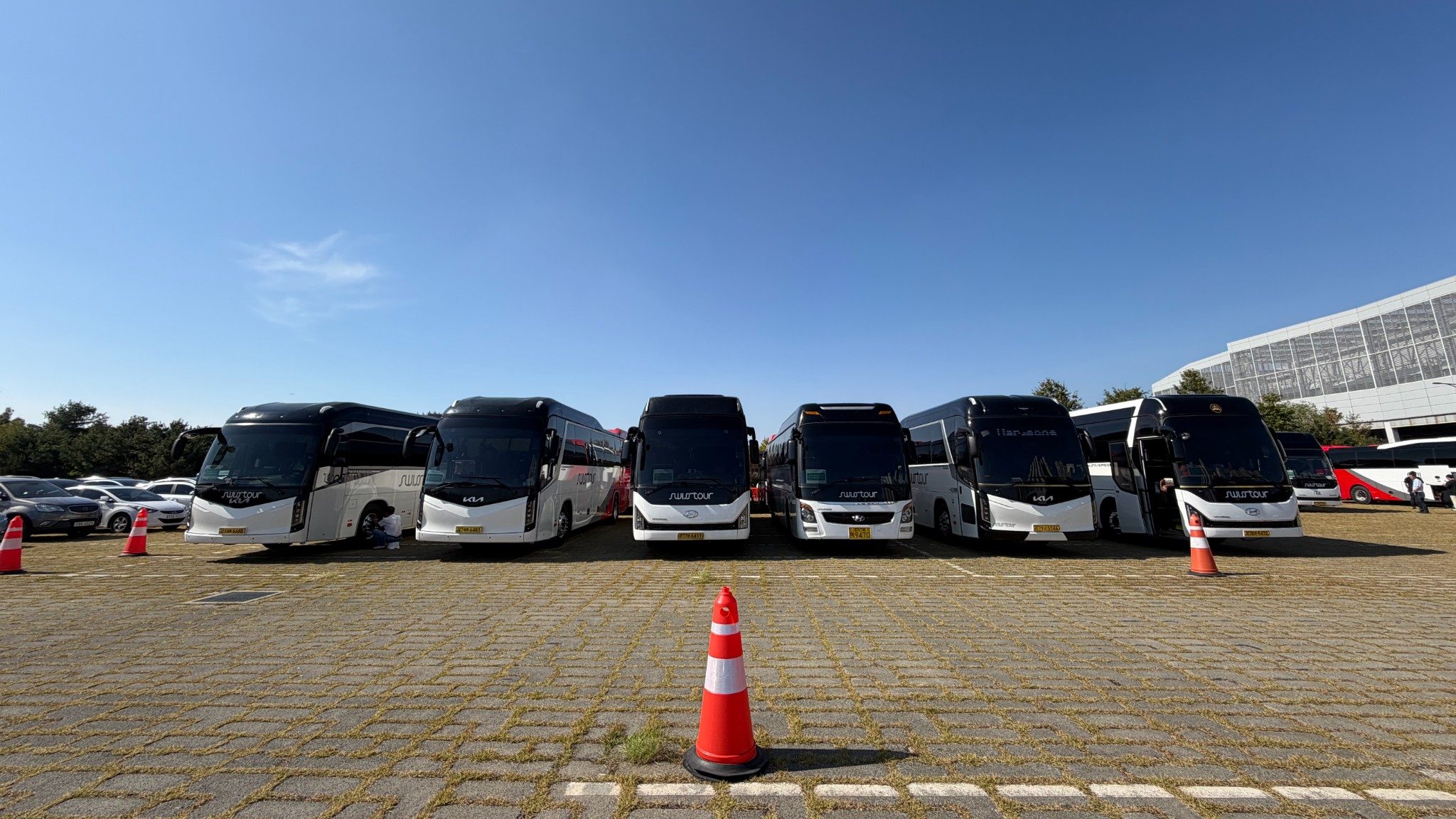
What a ticketed shuttle package involves
Concert shuttle operations generally fall into two categories: running buses under a service contract from the organizer, or building a shuttle product independently and selling it directly to attendees. At NOL FESTIVAL, GroundK took the second approach.
The package was listed on a concert ticketing platform and purchased by attendees directly. GroundK handled booking management, fleet planning, and on-site operations in full. Supply capacity was designed for 2,000 passengers and 50 buses per day, or 4,000 passengers and 100 buses across both days. Actual sales came to 1,554 seats.
This model is structurally different from shuttle management on behalf of an organizer. GroundK owns the product, holds the inventory, and lists it through sales channels, taking on both the operational risk and the full service design.
Route and departure schedule design
The two departure points were Hapjeong Station Exit 9 and Lotte Mart Zettaplex Jamsil, covering northwest and southeast Seoul respectively. The pairing also reflected where international visitors tend to stay.
Departures ran across four time slots each day: 09:30, 10:00, 11:00, and 12:00. The 12:00 slot operated on the Hapjeong route only. Return services began departing after shows ended around 21:00, with buses leaving in order of capacity, and the final bus planned for 22:30.
Return drop-offs were spread across 4 stops, more than the two departure points. Hapjeong Station and Jamsil were joined by Myeongdong Station and Gangnam Station to distribute post-show crowds.
Running a trilingual booking system
The booking page ran in Korean, English, and Chinese. Attendees selected their departure point and time slot directly, with boarding location maps included on the page. Confirmation emails and vouchers went out automatically on booking completion.
Looking at contact information from reservations, the highest volume came from China, followed by Japan, Korea, and Taiwan. For K-pop and K-culture events that draw significant international audiences, a Korean-only booking system leaves a material share of that audience without a reliable path to purchase.
Booking data fed directly into fleet allocation. Bus counts per route and time slot were adjusted against live reservation figures.
Managing vehicle and pedestrian flow at KINTEX
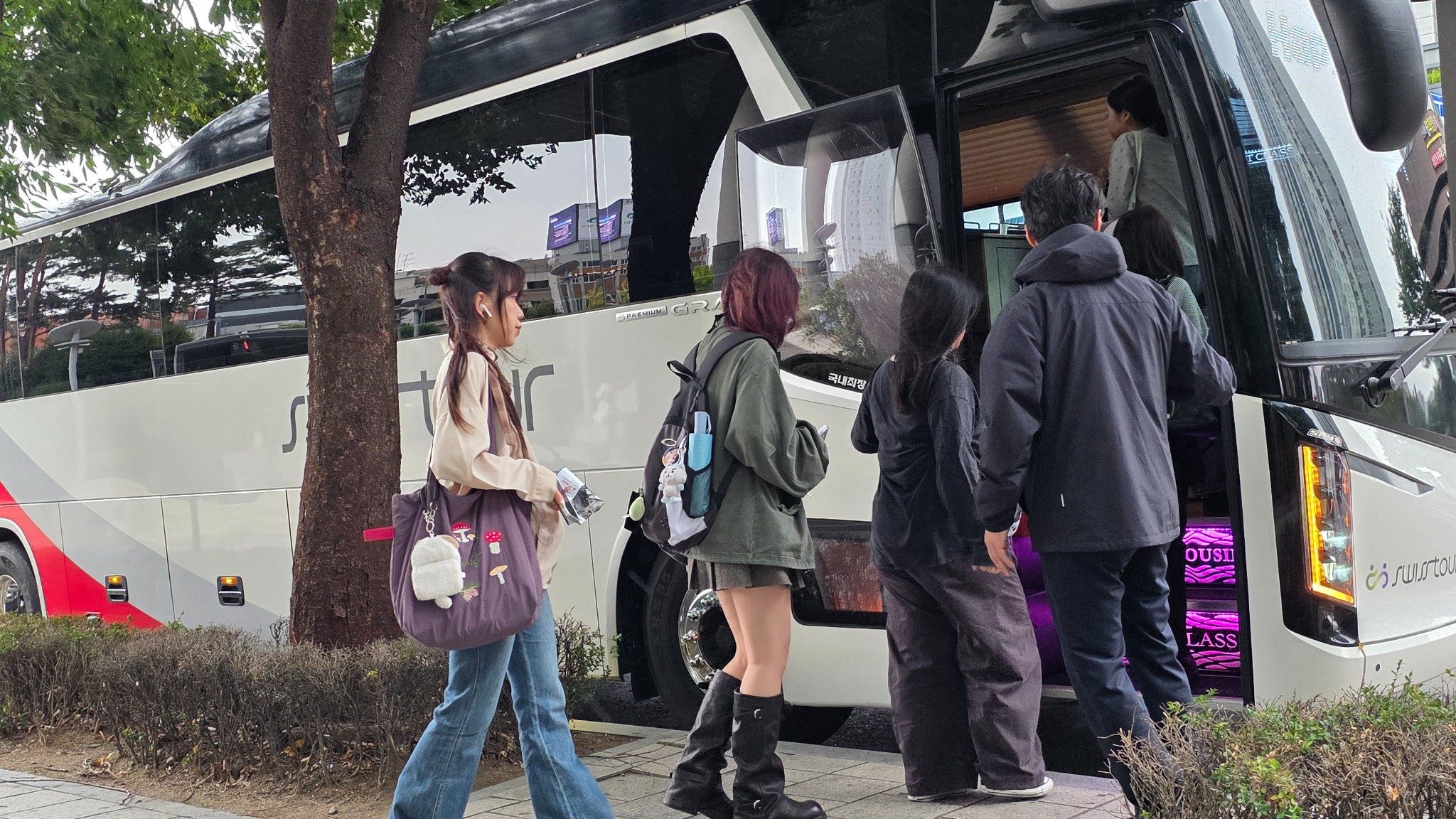
One of the core challenges at KINTEX Hall 2 is keeping vehicle movement and pedestrian flow separated across a large parking area. GroundK set drop-off along the straight section of T4 temporary parking, with buses clearing to a designated holding zone immediately after and attendees walking to the venue entrance through the central underpass.
Parking was arranged the day before the event. GroundK sent the full vehicle list to the KINTEX parking coordination team in advance and settled parking fees ahead of arrival, cutting on-site wait times.
Evening return operations ran on a separate procedure. All buses had lights on one hour before the shows ended. Routes were assigned to distinct zones, with traffic cones and barriers marking pedestrian corridors. Boarding required QR ticket scanning, which controlled crowding and kept buses from exceeding capacity.
On-site operations package
For this event, GroundK assembled bus procurement, staff recruitment, equipment rental, and printed materials as a single package. That included X-banners, route signs, flyers, A-boards, and bus identification placards.
Bundling the on-site package this way is particularly useful for events with short preparation windows or organizers without deep experience running their own ground transportation. It removes the need for the organizer to negotiate separately with multiple vendors and keeps on-site execution consistent.
Structuring shuttle operations as a retail product is part of GroundK's approach to mega-event transportation. In 2026, the same ticketed shuttle model was also applied to the SBS Gayo Daejeon Summer operation.
What this operation confirmed
When a concert shuttle is sold as a retail product, international attendee support becomes a distinct planning requirement.
Extending the return network beyond the two departure points also proved its worth. With only two drop-off locations for a crowd dispersing all at once after a show, boarding queues would have grown and operations would have become harder to control. The four-stop return structure, with Myeongdong Station and Gangnam Station added, kept the return operation running steadily.