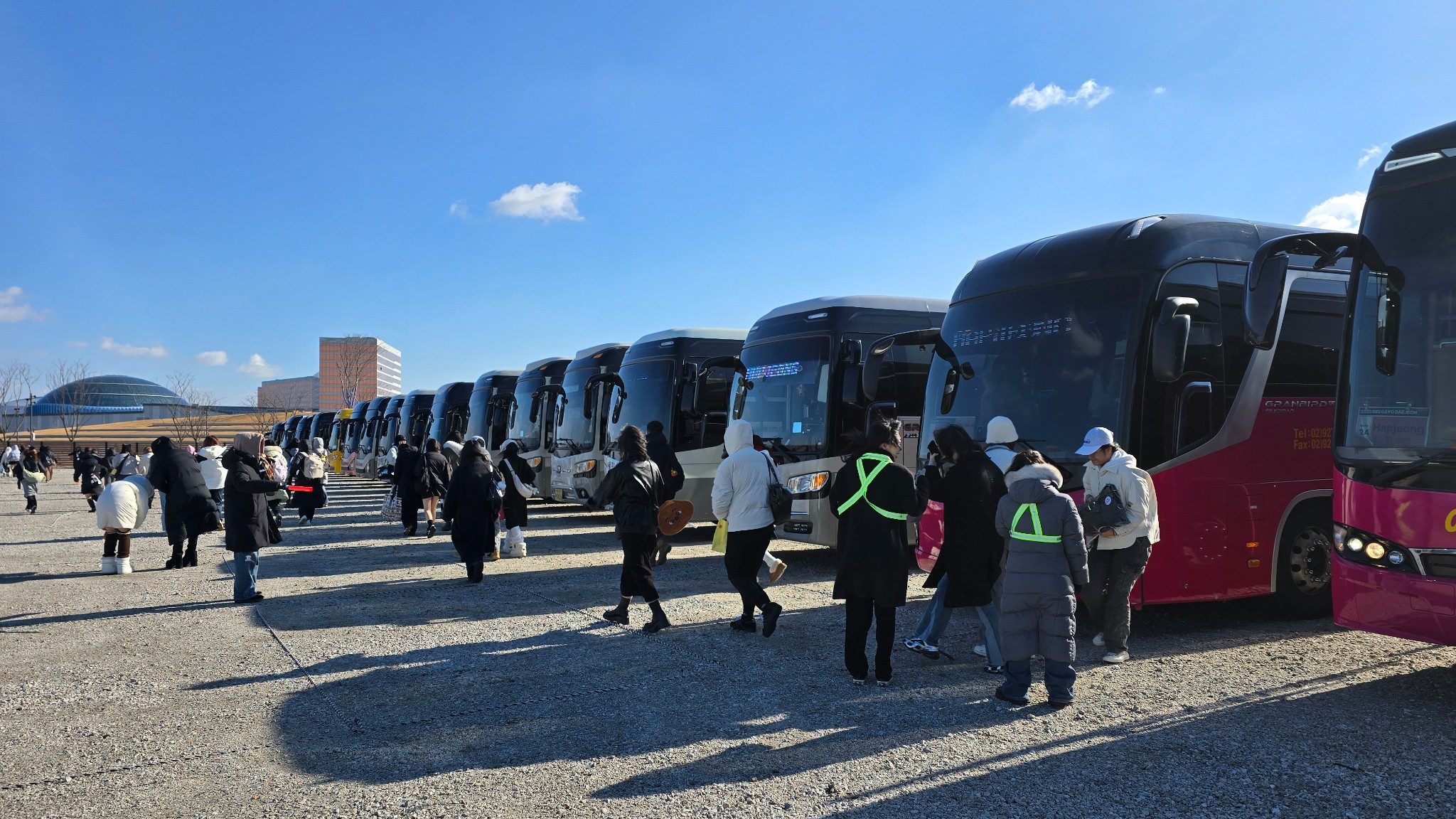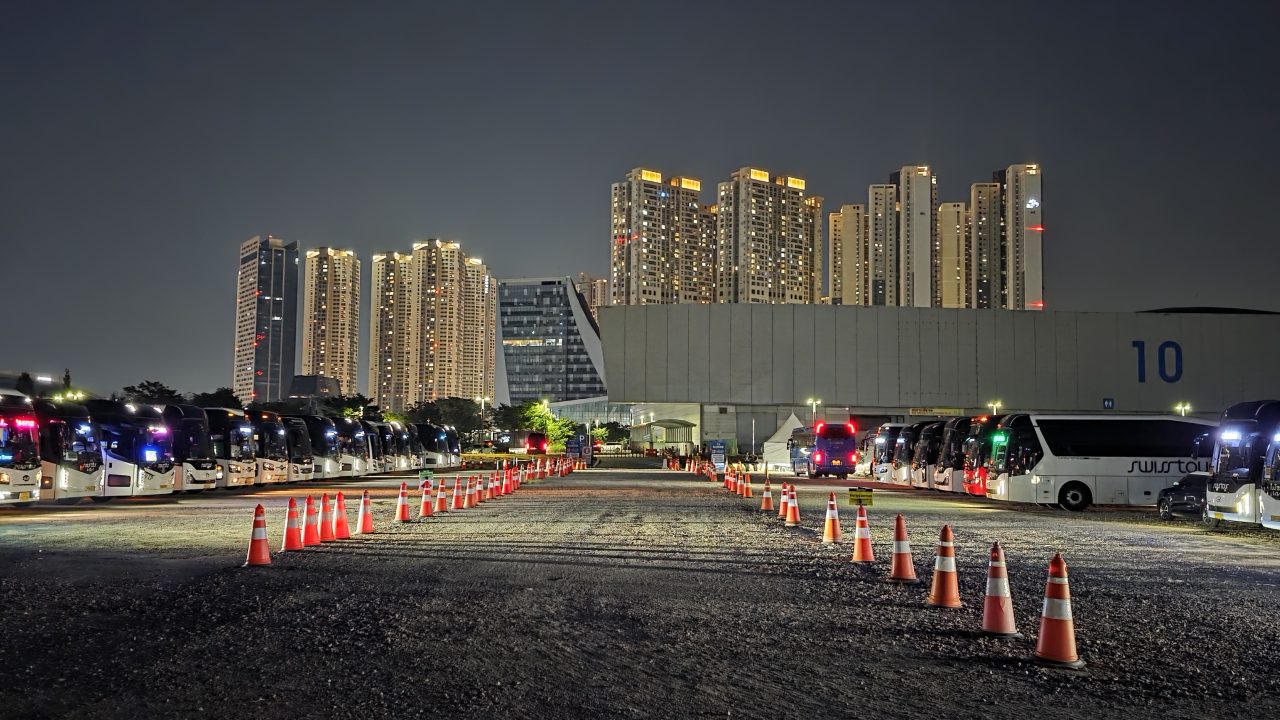
At the 2026 Gayo Daejeon Summer held at KINTEX Hall 1, GroundK deployed 37 large 45-seat coaches to transport 1,464 passengers. The scope covered the full shuttle lifecycle: booking platform setup, QR ticket scanning, on-site staffing, and installation through teardown, all managed under a single operational framework. Running from an 08:50 crew call to a 22:30 last departure, the operation ran approximately 14 hours across 2 outbound pick-up points and 4 return drop-off stops.
Group transportation is a different problem than VIP handling
Concert shuttle operations have almost nothing in common with executive transfers. VIP handling is about controlling one person's movement with precision. Group transportation is about moving thousands of people through a predictable, managed flow. The 2026 Gayo Daejeon Summer was firmly the latter.
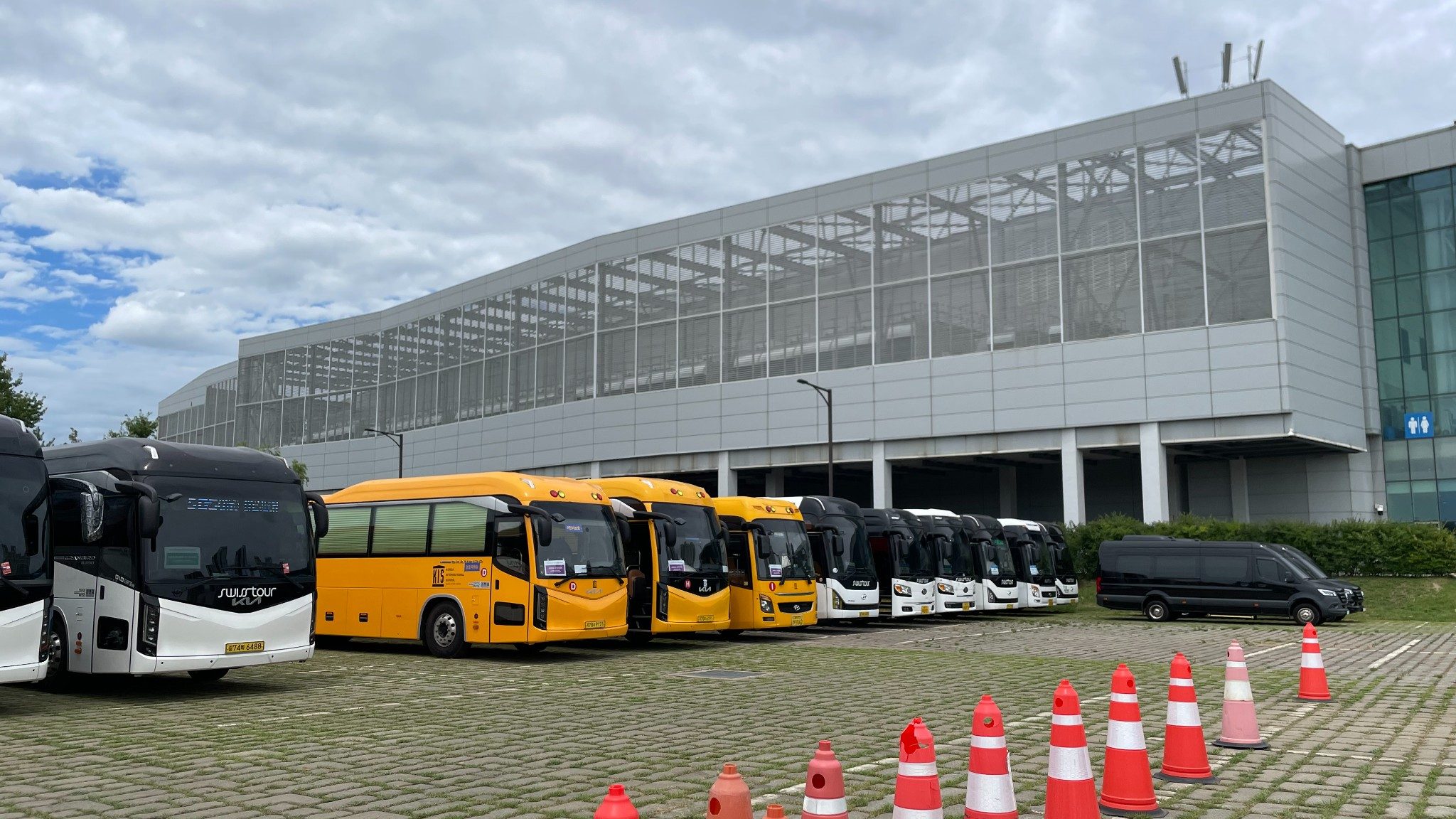
The booking structure was two-tiered: concert tickets were purchased through NOL WORLD, while shuttle reservations had to be made separately through RIDEUS to receive a boarding QR code. The operation also had to account for 1,464 people exiting simultaneously at show's end, and a narrow vehicle access point at the venue that required its own traffic routing plan. Reservation data, vehicle allocation, on-site ticket scanning, and return routing all had to function within one coherent system.
Starting with 75 vehicles and committing to 37
GroundK initially secured a pool of 75 coaches, representing capacity for up to 3,000 passengers. Once confirmed ticket sales figures came in, the fleet was right-sized to 37 vehicles.
Over-allocating wastes budget; under-allocating means a failed operation. Hitting the right number requires reservation data and dispatch planning to live in the same system. The adjustment was possible because the operation ran on T-RiseUp TMS, which reflected live sales data in real time.
The breakdown by departure and route was as follows.
| Departure | Hapjeong Stn. passengers | Hapjeong Stn. coaches | Jamsil passengers | Jamsil coaches |
|---|---|---|---|---|
| 09:30 | 83 | 2 | 23 | 1 |
| 10:00 | 272 | 6 | 26 | 1 |
| 11:00 | 520 | 13 | 176 | 5 |
| 12:00 | 360 | 9 | - | - |
| Total | 1,239 | 30 | 225 | 7 |
The 11:00 departure concentrated 18 coaches in a single wave, accounting for 49% of all outbound movements within one hour. How that slot was managed set the tone for the entire day.
Getting 1,464 people home in 90 minutes after the show
The post-show period is the most operationally complex part of any concert shuttle. With the entire audience exiting at once, GroundK pre-designed a five-layer return system.
All 37 coaches staged in assigned route zones before the show ended
Electronic destination boards and headlights lit on every vehicle for route identification
Passengers queued in two lines and boarded from the nearest vehicle forward, with each coach departing once full
Keep-right movement rules applied to both vehicles and passengers throughout the car park
Immediate departure on full capacity to minimize waiting time
From show end to the last departure at 22:30 was approximately 90 minutes. The pre-planned staging meant the return flow moved without passenger congestion or vehicle gridlock.
Resolving the two-step booking and QR scanning problem
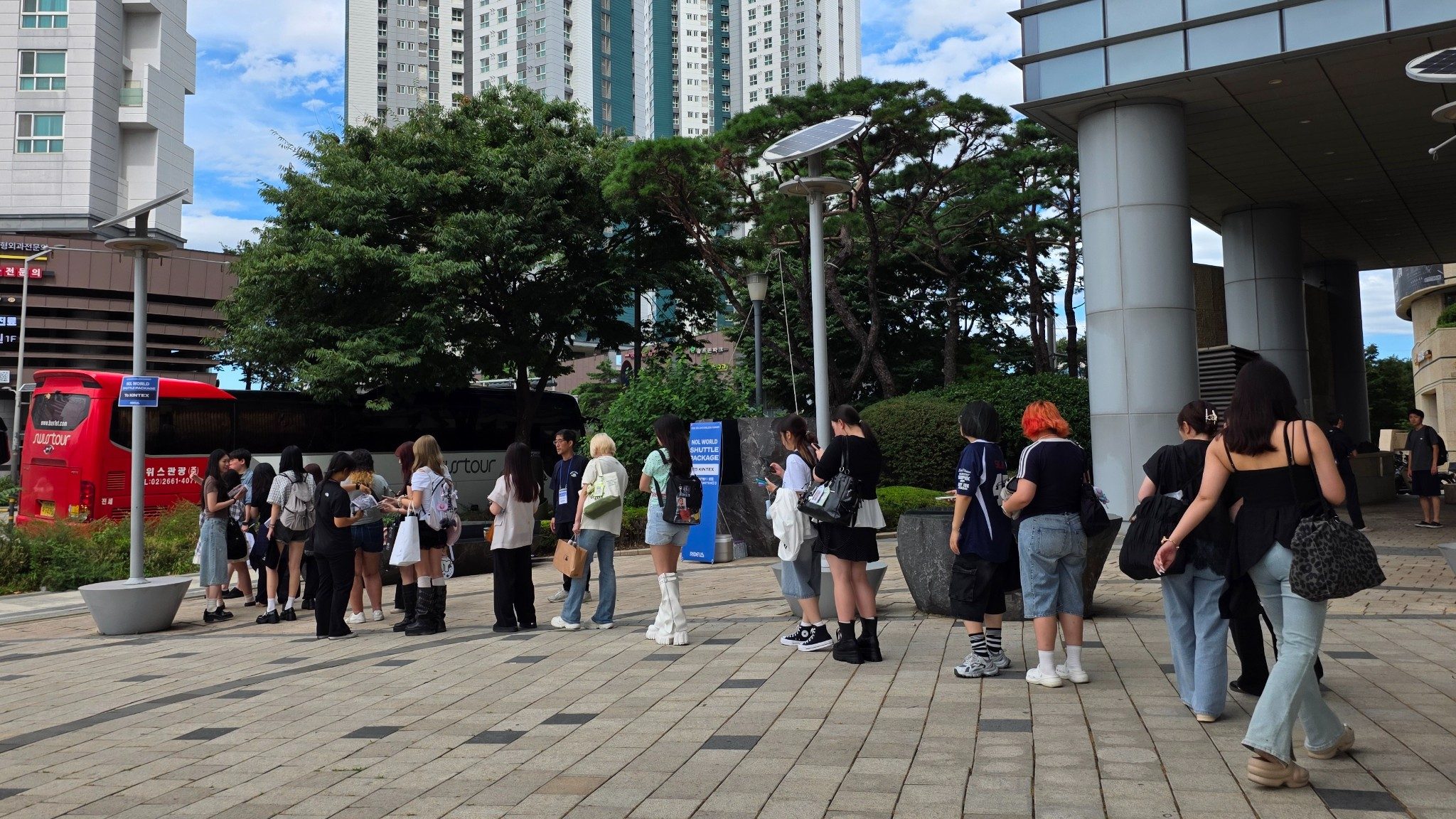
Another operational challenge was the split booking flow. Passengers who purchased a shuttle package through NOL WORLD still had to complete a separate reservation on RIDEUS to receive their boarding QR code. Without clear pre-event communication, this structure was likely to produce on-site confusion from passengers without valid QR codes.
GroundK addressed this before the event.
Three retrieval paths for the voucher QR were communicated to all passengers: email, SMS, and the RIDEUS website
Written response guidelines directed staff to route non-member bookers (who could not look up reservation numbers) to email confirmation
Staff lanyards had a RIDEUS access QR printed on the reverse, giving every team member a quick on-site reference tool
Five scanning accounts were issued by route (Jamsil: 1, Hapjeong: 3, reserve: 1), eliminating bottlenecks from single-point scanning
The RIDEUS admin app supported both front and back QR scanning, keeping boarding status updated in real time throughout the operation.
Single-vendor accountability from platform to teardown
Splitting shuttle operations across multiple vendors creates gaps at every handoff. When the team that built the booking system is different from the team running the event, and when the people reading scanning data are separate from those managing dispatch, accountability dissolves the moment something goes wrong.
For this event, GroundK consolidated every function under one operational structure.
Booking platform: RIDEUS-based shuttle reservation and QR issuance
Fleet management: 37-vehicle dispatch determined from live sales data
On-site operations: 9 GroundK staff and 10 operations crew (19 total)
Installation and teardown: equipment delivery from 08:40 through post-22:30 breakdown
On the same day, 9 August 2026, GroundK was simultaneously running protocol transfers for a European football club's squad in Seoul while managing these 37-vehicle shuttle operations at KINTEX in Goyang. It was a single-day deployment of both mega-event transportation and shuttle management running in parallel.
What this operation demonstrates
As K-pop concert shuttle operations grow in scale, the gap between planning and execution widens. When reservation data is not connected to the dispatch system, vehicle counts become guesswork. When QR scanning procedures are not shared with on-site staff in advance, the 30 minutes immediately after a show ends in confusion.
This operation showed what closing that gap looks like in practice: final vehicle allocation built on actual sales data, a routing design that distributed passengers from 2 pick-up points to 4 drop-off stops, pre-show vehicle staging with route-separated queuing lanes, and three-channel QR guidance to prevent booking confusion at the gate. Because every one of those decisions was made and documented before the event day, 14 hours of operations finished exactly as planned.