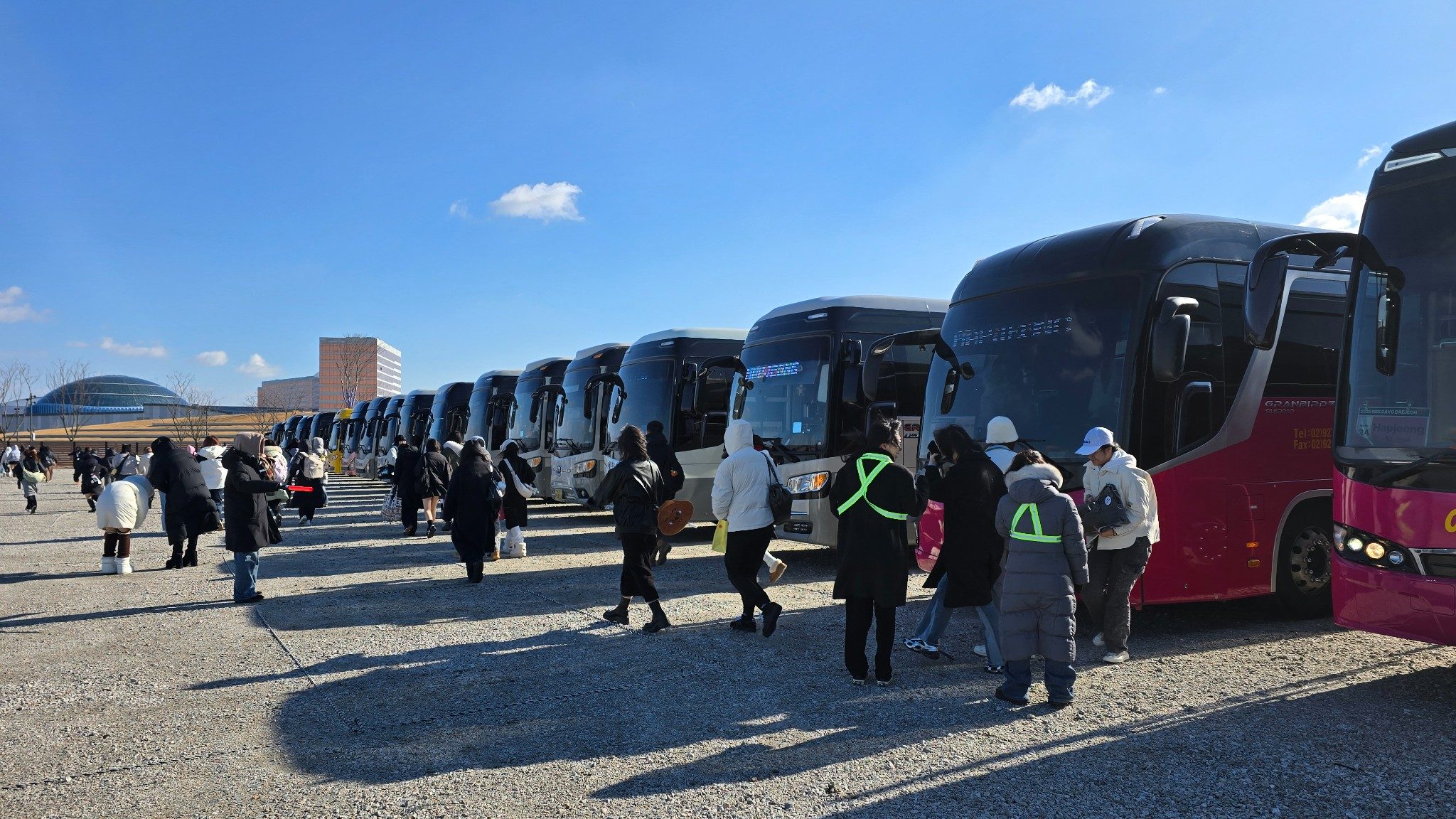
GroundK operated a coach shuttle between Seoul Station and the Cheonan festival site for the 2026 Cheonan K-Culture Festival, completing four runs over four days while deploying on-site staff to guide international visitors. The contract was issued through the local government's public procurement system.
The Seoul-to-Cheonan transfer brief
Cheonan sits close enough to the Seoul metropolitan area to draw day-trippers, but the festival site itself still requires a dedicated departure-point shuttle to make the trip practical. The 2026 K-Culture Festival drew a significant number of international visitors, so the brief called for more than coaches: staff who could orient foreign attendees at the boarding point were part of the scope from the start.
GroundK anchored the service at Seoul Station, running coaches to the site while embedding guide staff on each departure. Ground transportation and visitor orientation were handled under a single contract. The operating window ran from 2 to 5 September, with procurement and invoicing handled through the local government's public purchasing process.
Operations: four runs, international visitor support
Four shuttle runs were scheduled across the four-day festival. Departures were distributed across 2, 4, and 5 September, with two runs on the final day to absorb the closing-day surge. Three full-size coaches were assigned to the service.
Guide staff were stationed at the Seoul Station departure point. To support passengers who did not read Korean, 120 printed information leaflets and an X-banner were prepared for the boarding area, covering the route and boarding procedure. Getting international visitors onto the right coach without confusion, in an environment mixing Korean and foreign languages, was the primary operational challenge on the ground.
Working within public procurement
The contract was issued through the local government's public procurement system, which puts a premium on precise delivery against contract terms and transparent invoicing. GroundK tracked each run against the dispatch log and submitted a full execution report at the invoicing stage, documenting actual runs and vehicle utilisation against the agreed plan.
The same operational record-keeping applied in shuttle management projects was carried over here: even at small scale, dispatch records and on-site staffing logs were maintained in the same structured way used for larger events.
What small-scale public festival transfers require
Local government festival shuttles typically involve fewer runs and fewer vehicles than large-scale events, which means a single missed or delayed departure has an outsized effect on the overall schedule. All four runs were completed as planned.
Preparing the printed leaflets and signage as part of the same contract, rather than splitting them off as a separate procurement, meant that the team managing the coaches also controlled the boarding-area information. That single-operator arrangement reduced the coordination overhead that would otherwise fall on the festival organiser.