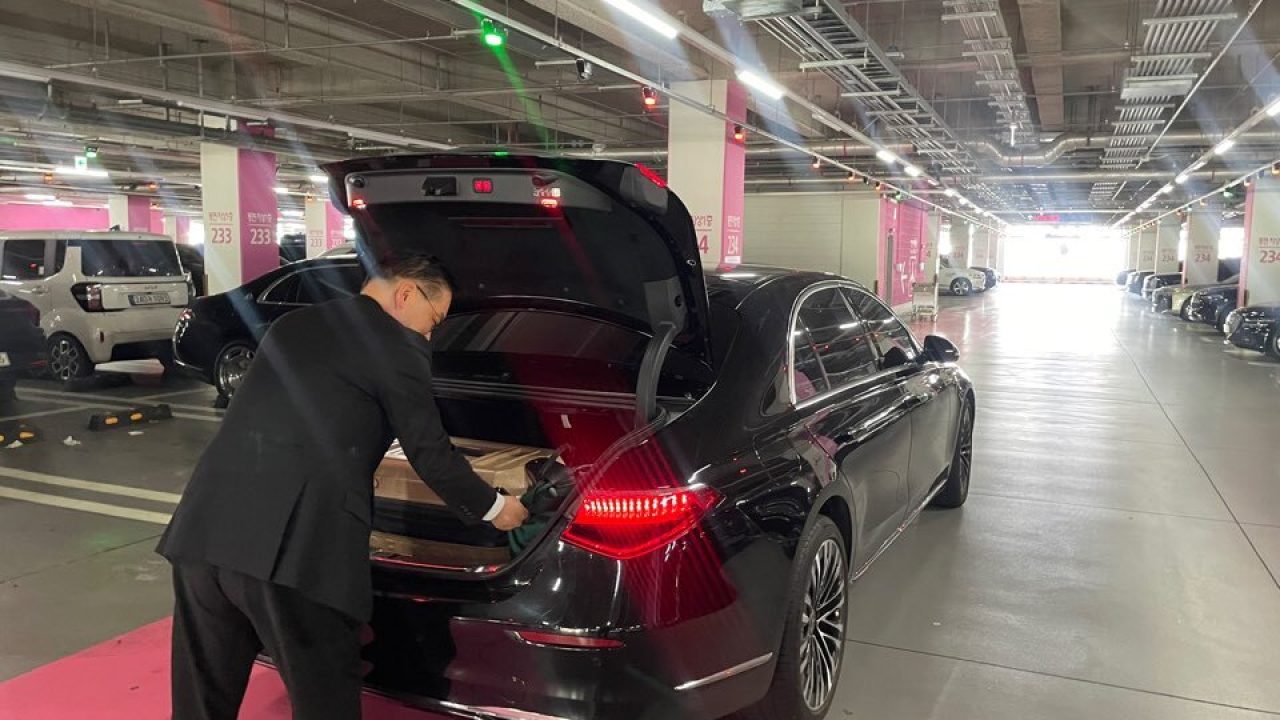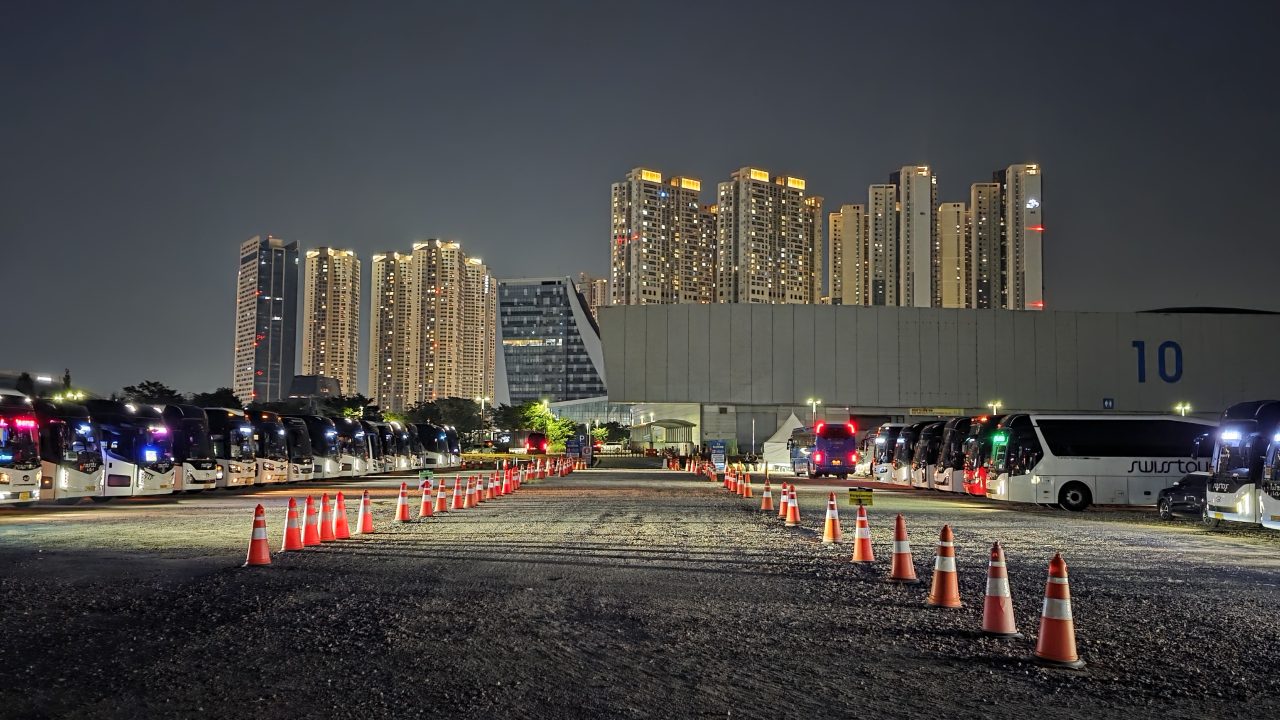
GroundK ran the shuttle operations for SK Hynix ThanksFULL Day, an employee appreciation event held on 15 October 2026 at Seoul Land in Gwacheon. Fifty-three buses departed from four points: Icheon Campus, Cheongju three campuses, Seoul Station, and Express Bus Terminal. A total of 833 employees boarded for the inbound trip and 838 for the return, with 19 on-site staff managing the full day's operations.
How the operation was planned
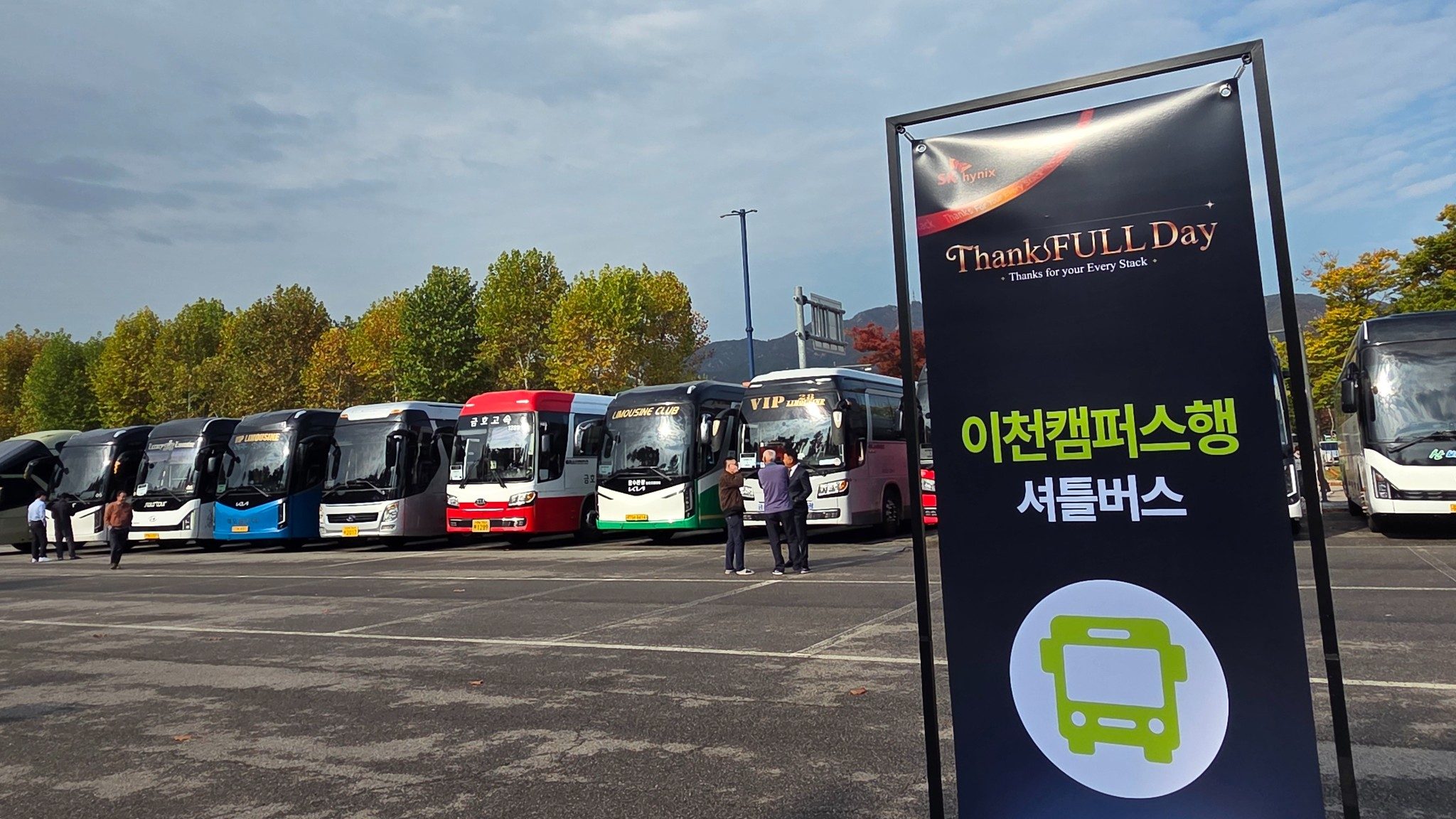
Given the scale and the spread of departure points, sourcing all vehicles from a single carrier was not viable. GroundK split the fleet across 5 carriers, so a supply problem at any one of them would not affect the overall operation.
The fleet consisted of 39 premium 28-seater coaches and 14 standard 45-seater coaches. Pre-registration headcounts confirmed the number of passengers per departure point, and the vehicle count was built first around 28-seaters, with 45-seaters added to reach 53 total. The shuttle pre-registration data collected on 6 October served as the baseline for all dispatch planning.
Route conditions across the four departure points
Operating conditions varied considerably by departure point.
Icheon Campus (3 boarding zones): approximately 69 km one way, 1 hour 5 minutes. 16 x 28-seaters and 5 x 45-seaters. Three additional 28-seaters ran separately for overseas affiliate employees.
Cheongju three campuses: approximately 122 km one way, 1 hour 50 minutes - the longest route in the operation. 16 x 28-seaters and 5 x 45-seaters made the round trip.
Seoul Station, Exit 13: approximately 16 km one way, 35 minutes. 2 x 28-seaters and 2 x 45-seaters. Return demand was relatively light, so the same vehicles circled back.
Express Bus Terminal, Exit 3: approximately 9.9 km one way, 25 minutes. 2 x 28-seaters and 2 x 45-seaters. As with Seoul Station, the same vehicles turned around for the return leg.
A route that takes over 3 hours 40 minutes round trip from Cheongju and one that takes under 50 minutes round trip from Express Bus Terminal were tracked from the same screen on the same day. Real-time GPS feeds through T-RiseUp PMS gave the operations team live vehicle positions via both web and mobile.
Managing the return peak
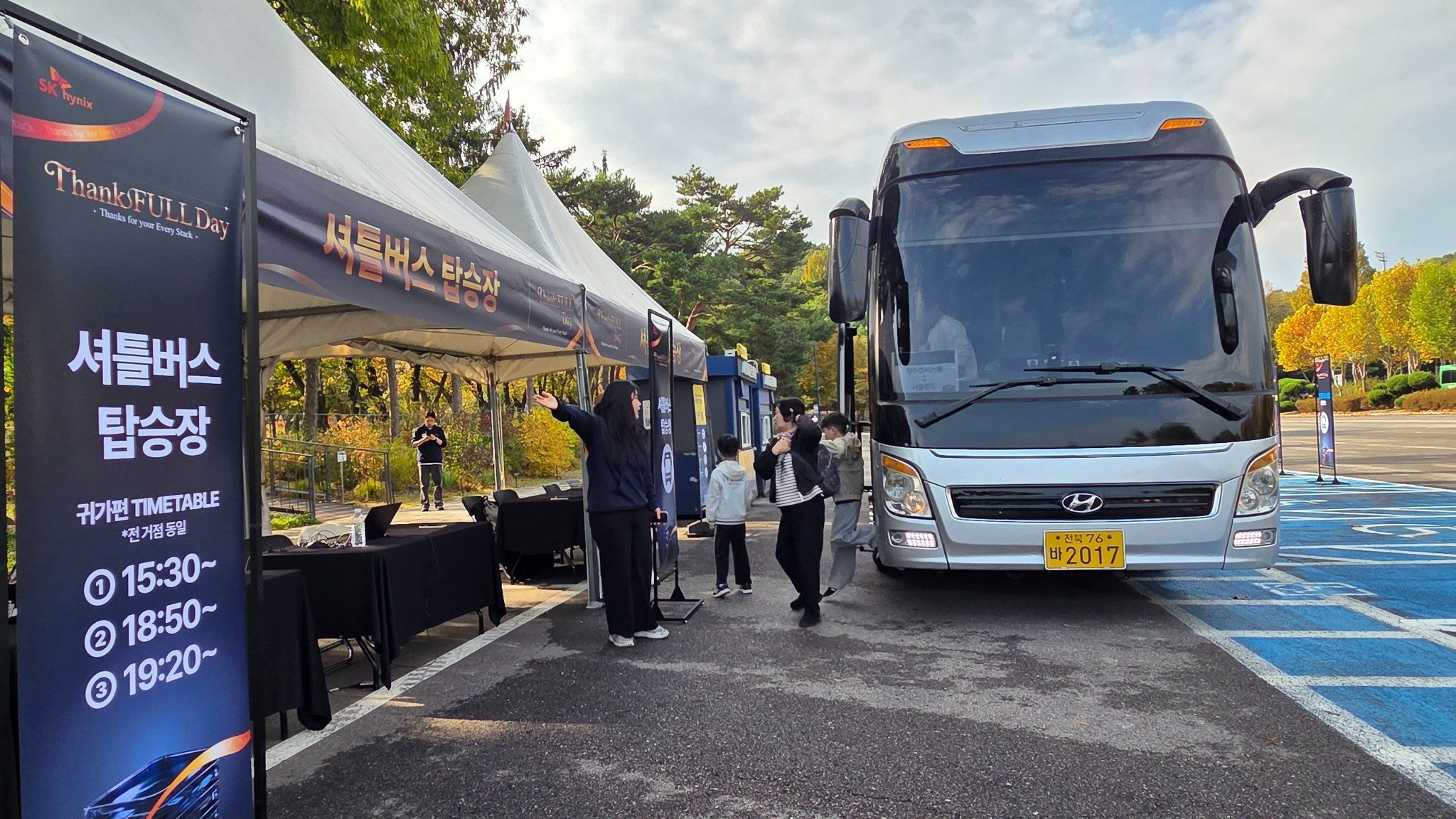
Inbound arrivals were split across two entry windows, and return departures were scheduled in three waves: 15:30, 18:50, and 19:20. The 19:20 wave was expected to be the busiest, with the bulk of employees leaving immediately after the event closed.
During the 18:50 to 19:20 peak, GroundK staged all vehicles still in service, plus standby coaches, at the Seoul Land departure zone. Boarding was managed in groups of 20 to keep the flow orderly. At the event venue, one manager and five staff ran the shuttle boarding desk and coordinated the return movement on the ground.
Staff allocation across 19 on-site personnel
One overall PM coordinated the full operation. Staffing by location broke down as follows.
Icheon Campus and Cheongju three campuses: 4 staff each (2 managers, 2 operations staff). Working from 07:00 through the planned wrap-up at 20:30.
Seoul Station and Express Bus Terminal: 2 staff each. Concentrated on the morning departure window and assigned a half-day shift.
Gwacheon event venue: 6 staff (1 manager, 5 operations staff). Responsible for the shuttle boarding desk from first arrivals through the final return departure.
Operations staff were recruited and briefed separately before deployment, covering their specific duties by location and the reporting procedure. At each departure point, staff confirmed and reported the number of passengers as each vehicle left, then filed a post-trip report covering vehicle sign-off and a lost-property check on return.
On-site signage and bus branding
Each departure point had X-banners and boarding guidance signs to help employees find their shuttle. Banners were hung from the top of MQ tents, 25 branded banners were placed inside the buses, and each bus displayed the event name on its front LED board so employees could identify their coach at a glance.
What this operation confirmed
With a mix of regional campus and central Seoul departure points, the most critical step was locking down headcounts per location before the event. Because pre-registration data drove all dispatch planning, vehicle counts and carrier assignments were finalized well in advance.
When a 1-hour-50-minute one-way route from Cheongju runs alongside a 25-minute one from Express Bus Terminal, having all vehicles on a single live tracking view gave the team a material advantage in responding to anything that shifted on the day. The structure is directly applicable to other multi-point employee event shuttles of similar scale.