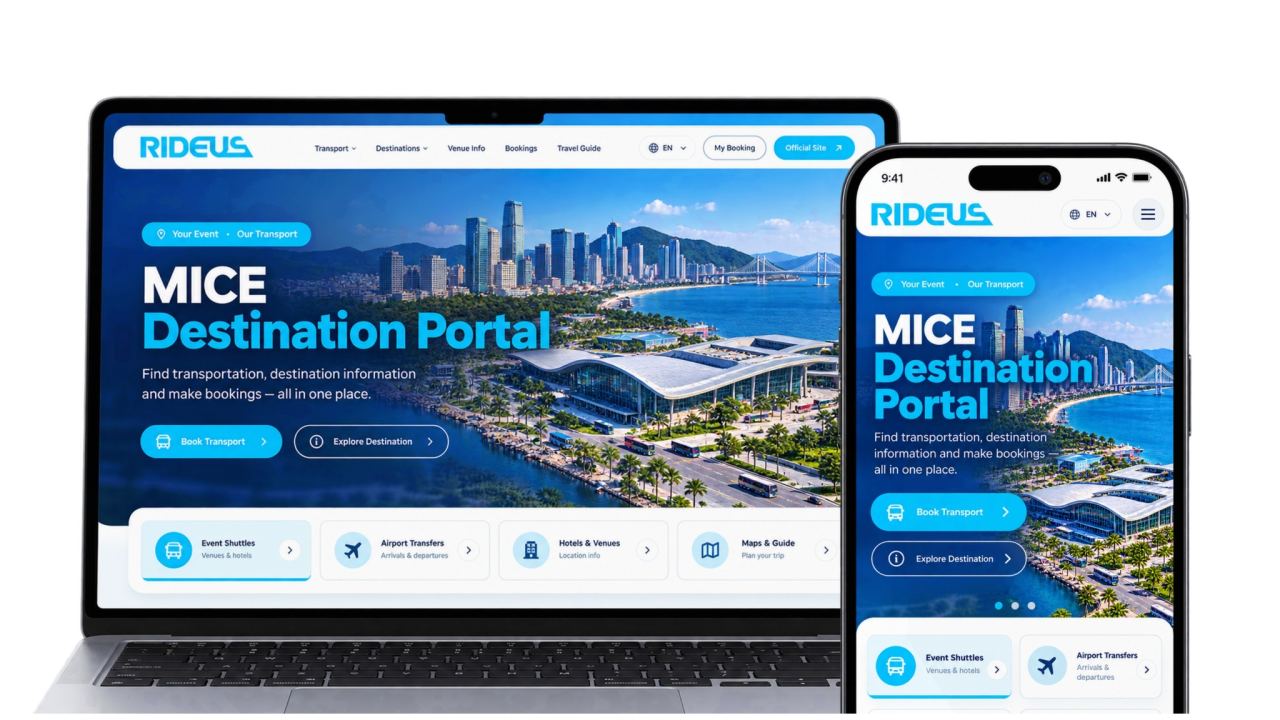
From 17 to 19 November 2026, GroundK was active on four fronts at KME 2026 in COEX Magok. The company opened a booth inside the Seoul Tourism Foundation's Seoul Pavilion and held 14 one-on-one business meetings. Its MICE Destination Portal won the Space Tech category at the MICE Tech Awards. CEO Jang Dong-won presented on talent strategy in the AX era at the Tourism and Leisure Industry Ulim Forum. And during KME, GroundK hosted 2026 Re:[Work], a session for examining how the MICE industry works. Each setting raised a version of the same question: who designs the travel experience?
Seoul Pavilion booth: "They see your brand. We make the way forward."
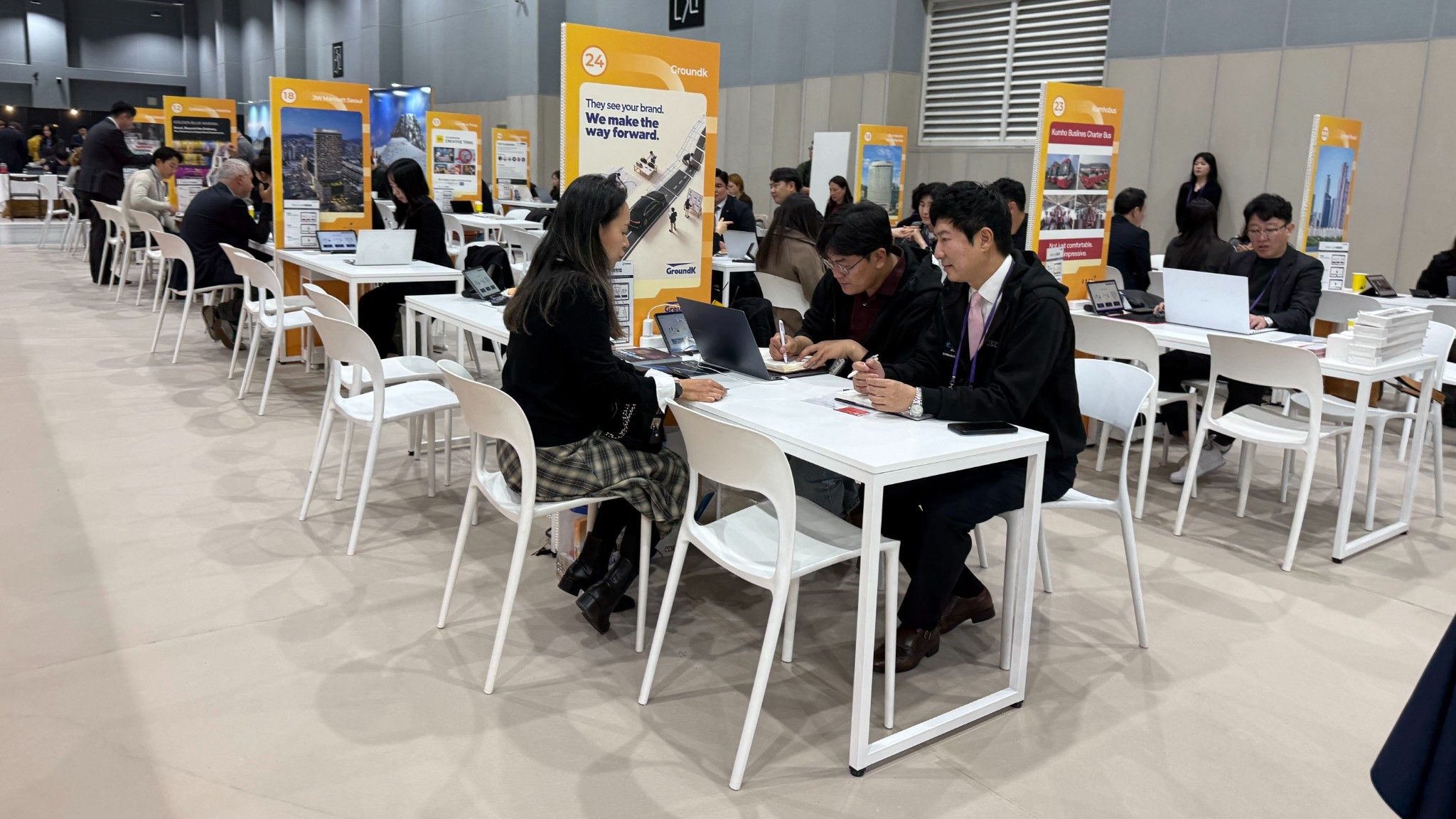
KME 2026 ran under the theme "Define Your Angle, Shape Your MICE." GroundK set up inside the Seoul Tourism Foundation's Seoul Pavilion and introduced itself as a company that designs and manages the guest experience around ground transportation.
The booth's central message came from the poster headline: "They see your brand. We make the way forward." Attendees interact with the host brand, not with GroundK. Event organizers and brands that want to offer a ground transportation service typically cannot manage the full chain in-house, from vehicle sourcing through dispatch to billing settlement. The model GroundK presented keeps the brand and its interface visible to the guest while GroundK runs the full operation behind it.
MICE Tech Awards 2026: two wins, two years, one platform
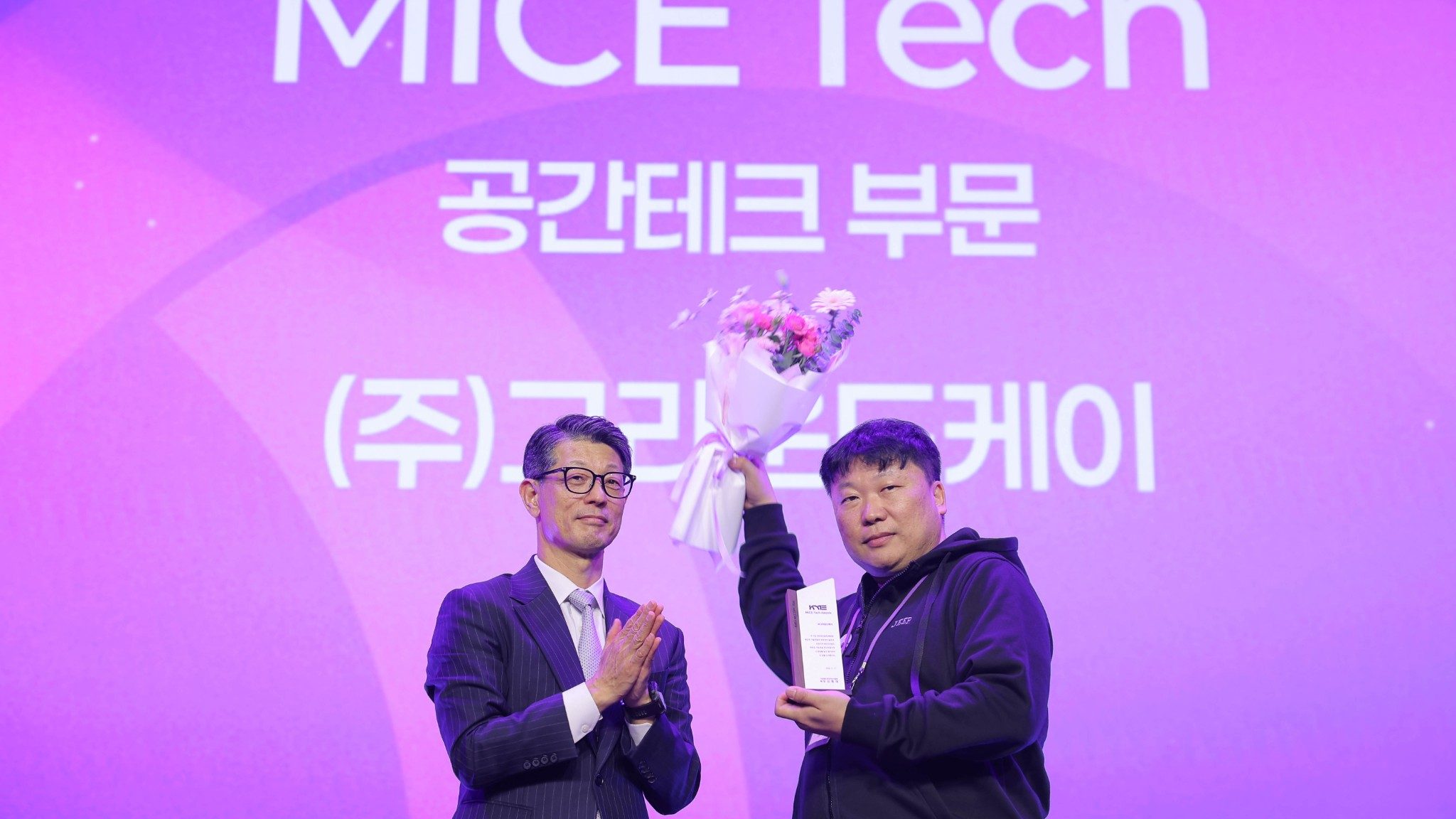
The Korea MICE Association awarded the Space Tech category at the MICE Tech Awards 2026 to GroundK's MICE Destination Portal. The announcement was made on 18 November at the MICE Tech Unpack Show.
In 2024, GroundK won the Korea MICE Association Chairman's Award in the Digital MICE category for T-RiseUp, its B2B transport management system. The 2026 award recognized a product built on the same platform but extended outward, giving event attendees a direct booking interface. The two years represent the same technical foundation applied in a different direction.
MICE Destination Portal's one-line definition: "Turn event attendees into destination visitors." The portal lets participants book transportation and browse local attractions from within the same interface where they access event information, including options for time between sessions.
Why this portal addresses a real gap
An international congress delegate spends an average of KRW 3.79 million inside Korea, roughly twice the KRW 1.89 million spent by a typical inbound tourist. Yet 81.7% of inbound visitors to Korea stay in the Seoul metropolitan area (2025 figures), and what delegates do outside the venue has never been captured as data.
The transportation an organizing committee or PCO typically provides covers official shuttles and VIP transfers. Any delegate arriving outside shuttle hours or staying at a non-official hotel must arrange their own ground transportation. Heavy luggage, gaps between sessions, and KTX reservations all fall to the individual. Tourism information on event websites tends to scatter across external links, and those external sites require Korean mobile authentication and domestic payment methods that most foreign participants cannot use, stopping them before they reach checkout.
MICE Destination Portal fills that gap.
Two portal types: event portal and city portal
The platform produces two distinct portal types depending on the use case.
The event portal is opened in partnership with an event organizer and runs around the event dates, using the event's name, logo, and color palette. Attendees can save sessions of interest and receive email reminders before each one starts, get recommendations for nearby spots and lunch options during session gaps, and compare and book KTX and bus routes from the airport or Seoul Station without leaving the portal.
The city portal serves a destination rather than a single event, runs year-round, and targets travelers whether or not an event is taking place. Visitors can book city tours and regional travel passes directly, and the portal links transportation and luggage delivery bookings to event-driven content such as fireworks festivals and drone shows.
Both portal types support airport pickups and private vehicle hire, KTX, airport limousine and airport railroad, eSIM, and luggage delivery across 13 affiliated zones.
What the Tech Award recognized: a booking operations system, not a directory
The technical architecture is what drew attention in the awards assessment. Routes, vehicles, products, fares, and location data for attractions and stops are entered once into the T-RiseUp asset management system and then surface across whichever event or city portals are configured to show them. When a participant books and pays, the reservation passes automatically to the linked supplier and the service runs.
Each new event does not require a fresh build. Operators configure which services to show, payment currency (KRW or USD), user eligibility and access codes, cancellation policy, visual design, and language. Any change made in T-RiseUp propagates instantly to every connected portal, which matters in MICE environments where scheduling changes run up to the day an event opens.
Six design principles address the booking barriers foreign participants typically face. The interface defaults to Korean and English, with Japanese and Chinese available as additions. Payments accept international cards, PayPal, and overseas digital wallets. No Korean mobile phone authentication or resident registration number is required. Reservations are retrievable by booking number and one-time code without creating an account. All fares and fees are shown before checkout. The portal runs in a mobile browser with no app installation required.
Measured results from portal deployments include bookings from participants across 10 countries, 210 USD transactions on international cards, an average KTX booking lead time of 16 days before travel, and a cumulative total of 3,800 unique portal visitors. The figures matter less for their size than for what they confirm: participants were planning their travel to Korea before they arrived, and that behavior was captured as data for the first time.
That data feeds the design of subsequent events. Attendee session selections, nationality and language, port of entry and arrival time, length of stay, accommodation area, venues visited, and visit times are now collected in a single place for the first time.
Tourism and Leisure Industry Ulim Forum: "The CEO obsessed with AI"
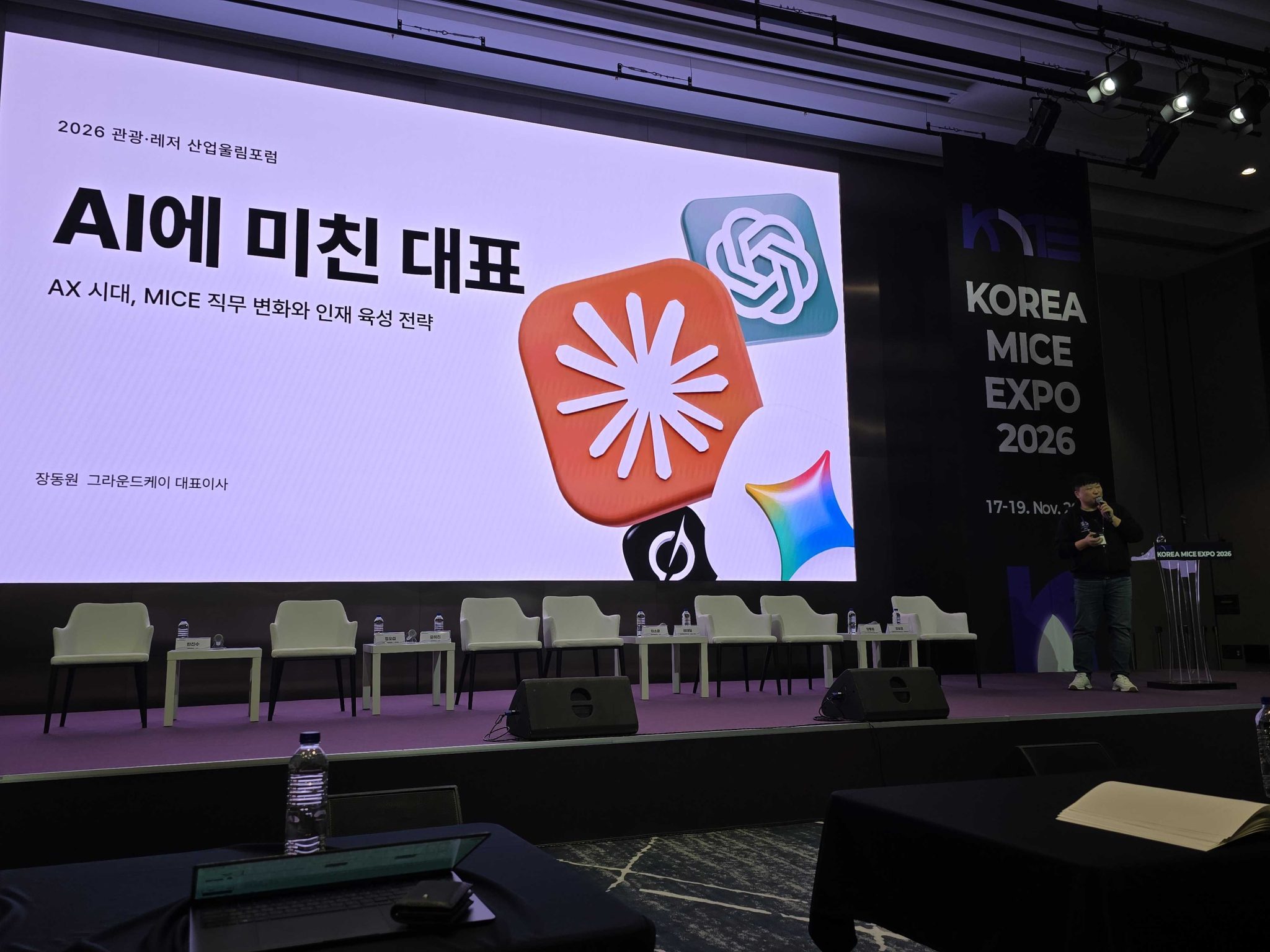
On the afternoon of 18 November, CEO Jang Dong-won presented at the Ulim Forum hosted by the Tourism and Leisure Industry Human Resources Development Committee (ISC). The title was "The CEO Obsessed with AI," with the subtitle "Changes in MICE roles and talent development strategy in the AX era."
The presentation opened with a personal account. "The CEO obsessed with AI" was not originally meant as a compliment. Jang described accepting that label and working through what it meant for how the company should change.
What using AI made visible
AI performs some tasks surprisingly well and fails others in ways that look plausible. MICE work involves a high volume of bespoke responses and little margin for experimentation, which makes AX adoption harder than in other industries. GroundK's working conclusion: assign method to AI, keep intent with people, and manage quality through structure rather than individual effort.
Meaningful AX adoption inside a company requires the CEO to use AI extensively first, in order to judge where it belongs and where it should not go.
The risk beyond AI: broken talent pipelines
AI takes over the work junior staff have traditionally done. Repetitive tasks, first-draft writing, and information sorting are how early-career employees build domain knowledge. If AI fills those roles, the development path for the next generation disappears with them.
The best opportunity to work with AI comes while a person is employed. Companies need to provide that opportunity deliberately. GroundK ran a seven-hour AI training session for all staff in December 2025, during which employees identified 24 specific work tasks where AI could apply. The company also created an internal FDE (Field Deployment Engineer) role, responsible for translating frontline operational judgment into rules and tools.
Redefining what it means to be good at the job
Technical skill is no longer a durable advantage; domain knowledge is. The valued capability shifts from being the person who executes well to being the person who directs well. The existing generation carries accumulated knowledge to transfer, and the AI-native generation brings the questions.
Re:[Work]: building what MICE does next
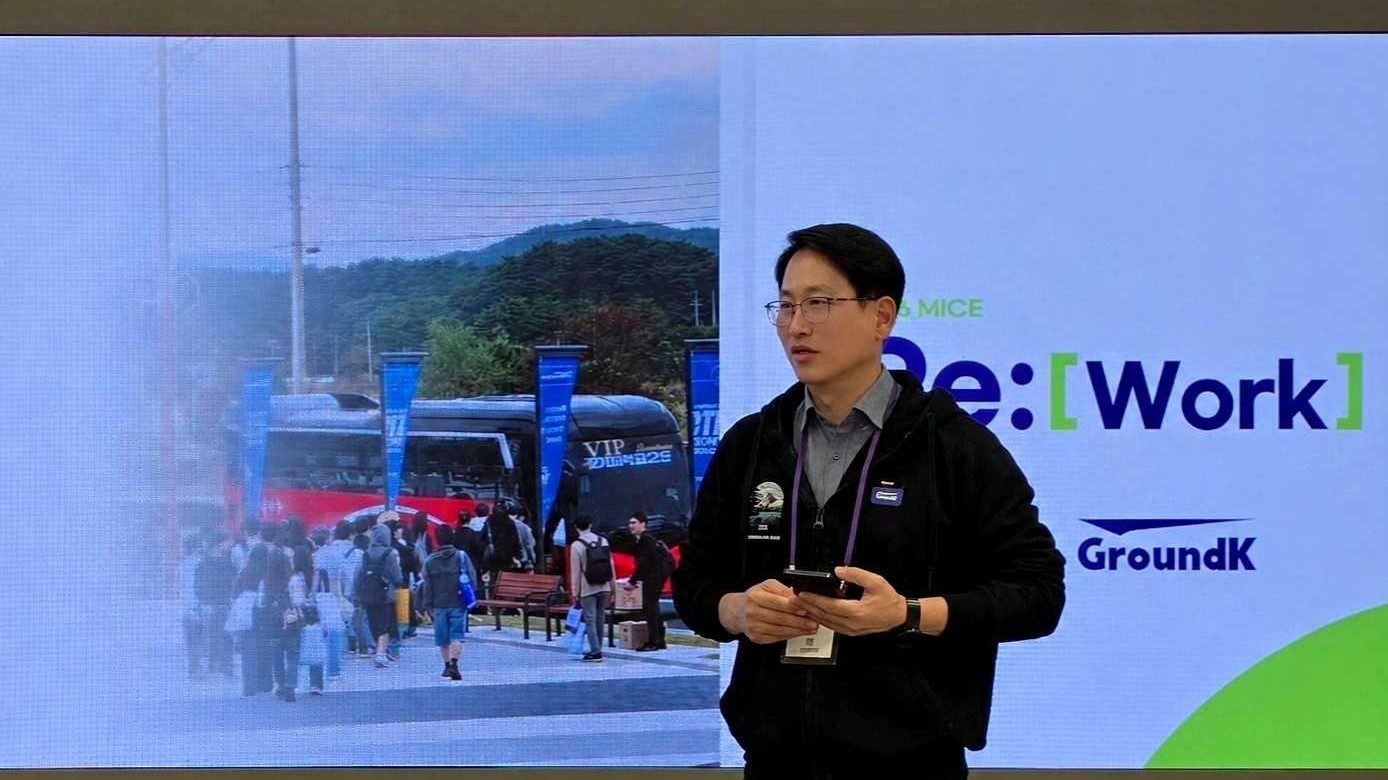
On 17 and 18 November, during KME 2026, GroundK hosted Re:[Work] at the Seoul MICE Plaza Summit Lounge on the seventh floor of Lotte Castle Le West Building D in Magok.
MICE Re:[ ] is an annual project in which GroundK changes the word inside the brackets each year. The 2026 theme was Work. The event tagline was "Building what MICE does next together" - a space where operational experience and new technology met, with the aim of examining current working methods and finding what the industry tries next.
Turning event attendees into destination visitors: Destination Portal
MICE data that AI can read
Case studies on data adoption in the MICE industry
Practical AX transformation for MICE operations
Running a MICE company on numbers and data
The question GroundK raised at KME 2026
The four settings were different, but each addressed the same set of questions: who designs the travel experience, who holds the data that experience generates, and how that data informs the next event.
The Seoul Pavilion booth introduced the role of building the route while staying out of the guest's view. The Tech Award-winning portal connected that role to a screen attendees use directly and proposed a path for linking tourism and MICE. The Ulim Forum presentation asked how to develop the people who build that screen. Re:[Work] brought that question out of the company and into the broader industry.