
GroundK managed integrated airport arrivals, departures, and in-conference transfers for African delegations at the 2026 KOAFEC (Korea-Africa Economic Cooperation Conference). Over nine days, the operation covered 181 runs with 79 vehicles deployed (deduplicated). Airport arrivals at Incheon totaled 73 runs, departures 71 runs, and one-way transfers with airport meet service accounted for a further 57 runs.
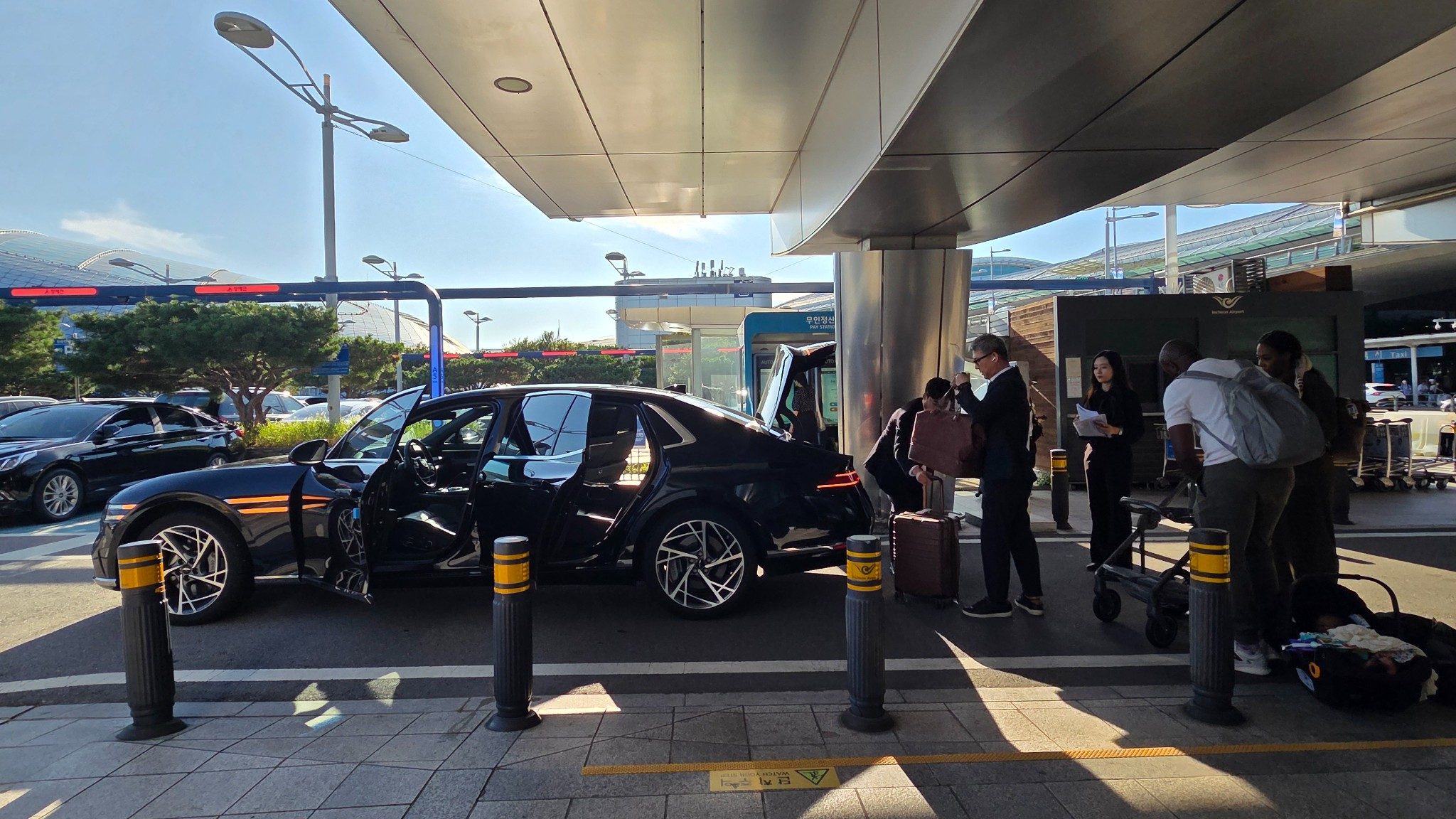
Staging 17 sedans simultaneously for a single arriving flight
The arrival peak fell on September 7, with 46 runs concentrated in a single day. For one flight arriving from Addis Ababa, 17 delegation sedans were staged simultaneously at the airport. Vehicle placement and greeter positions were coordinated in advance so that each delegation member could move directly to their assigned car as they cleared the aircraft.
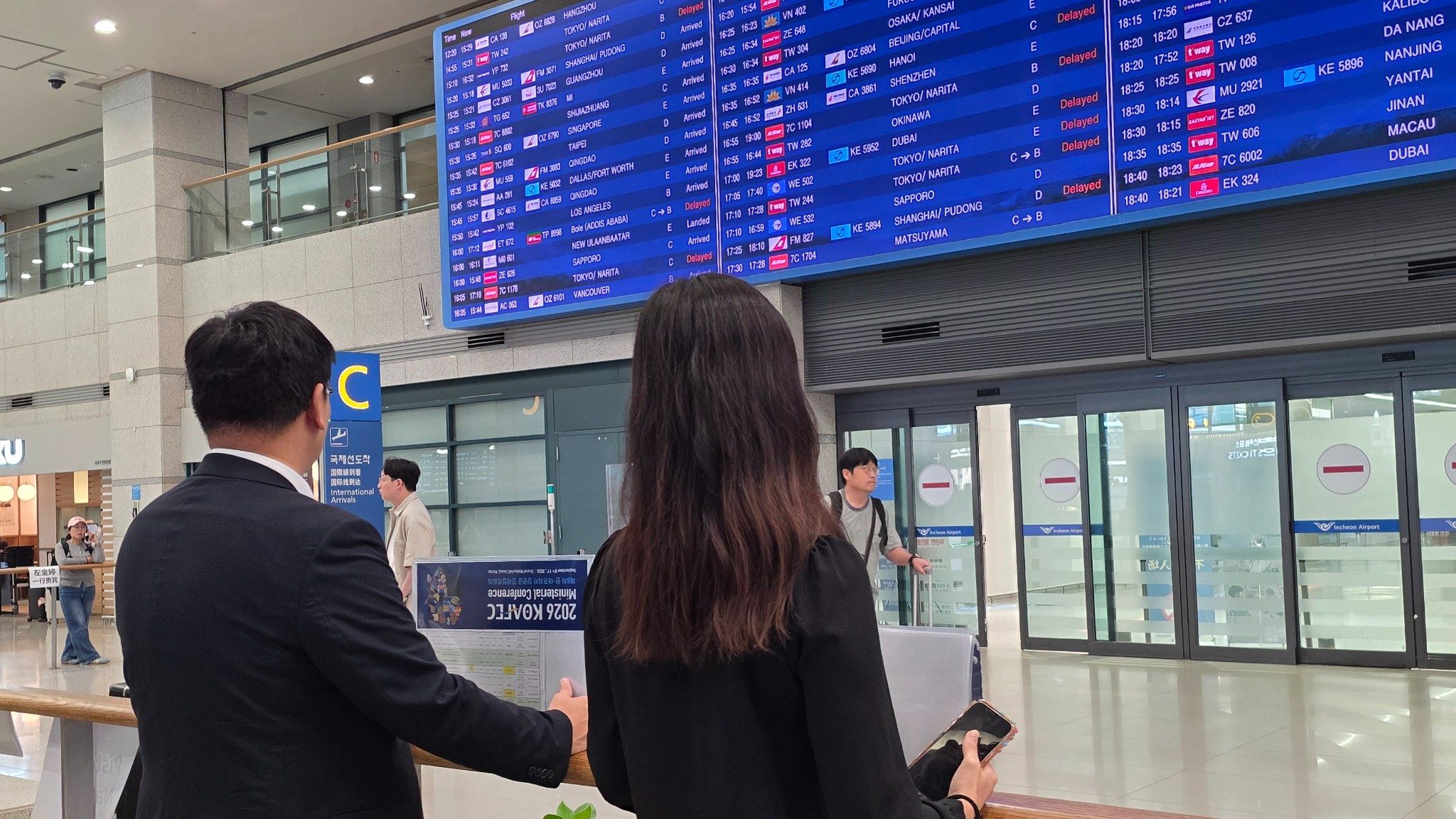
Delegations connected through 19 cities, including Addis Ababa, Doha, Istanbul, Dubai, and Paris, each with a different scheduled arrival. When connecting flight delays occurred, standby vehicles were reassigned on the spot.
The departure peak came on September 12, with 36 send-offs in one day. Terminal 1 and Terminal 2 at Incheon were handled simultaneously, with vehicles assigned to match each delegation's departure terminal.
How vehicles and service levels were matched to delegation tier
Delegations were classified into eight tiers: President, Vice President, Head of Delegation (HoD), HoD Representative, AfDB Executive Director, Advisor, Speaker, and Staff. Vehicle type and service approach varied by tier.
The most senior principals received six dedicated executive sedans on daily assignment throughout the conference. Heads of delegation received one-way executive sedan transfers paired with airport meet service, with protocol staff accompanying each delegate from the arrivals hall through to the vehicle. Staff and administrative personnel traveled by minibus or coach on group transfers.
One-way executive sedan runs made up the largest share at 141 runs, while protocol and administrative support minivans plus airport reserve vehicle runs accounted for 22 runs. All three service tiers operated concurrently at Incheon Airport and Grand Walkerhill Seoul.
How vehicle supply was scaled up
Handling up to 46 runs in a single day across nine days required more vehicles than GroundK's own fleet could cover. Five partner limousine companies were added alongside GroundK's own sedans and vans, bringing peak daily capacity to 45 vehicles.
As supply expanded, maintaining consistent service quality across the full fleet became the main operational challenge. The transportation control room tracked both GroundK vehicles and partner vehicles on the same system, keeping response times consistent. On September 7 and 8, when arrivals were heaviest, reserve minivans were pre-positioned at the airport in both morning and afternoon shifts to absorb connecting flight delays and unscheduled requests.
Why the airport team was merged with concurrent conferences
Other international conferences were running in Seoul during the same period as KOAFEC. GroundK consolidated airport arrival and departure staff from three events into one team. Running separate crews for each event in the same terminal space tends to create idle time and coordination gaps. A unified team reduced staffing overlap while keeping each conference's delegations clearly separated for routing and escort purposes.
Rather than having each airport greeter independently verify delegate names and vehicle plates, the transportation control room monitored all active runs and adjusted greeter positions and assignments in real time. This approach reflects the methodology GroundK has applied repeatedly in premium VIP ground transportation operations.
In-conference movement and industrial tours
Beyond airport transfers, GroundK handled delegation movement during the conference itself. On September 11, six tour bus runs covered an industrial and cultural site visit itinerary with five stops, moving delegations together in convoy by coach.
Staff shuttles and inter-hotel transfers added a further five minibus and coach runs. At Grand Walkerhill Seoul, the main hub, the team processed 96 pick-ups and 84 drop-offs over the full operating period.
Daily run counts tracked the event schedule directly. Volume picked up to 17 runs on September 6 as early arrivals began, and the six days from the September 7 arrival peak to the September 12 departure peak accounted for 157 runs, or 87% of the total.
African delegations travel from across the continent on different carriers via different hubs, so arrivals are spread unevenly through the day and vulnerable to cascading delays. Absorbing 46 runs on September 7 alone was possible because tier-by-tier vehicle assignments and reserve positions had been worked out in advance rather than managed reactively on the day.
Merging the airport teams from concurrent events reduced idle staffing while keeping each conference's delegations correctly identified and routed. For large international conferences drawing delegations from across Africa, the range of departure cities and the density of near-simultaneous arrivals make pre-planned tiered deployment the variable that determines whether operations hold together.


