GroundK started as a ground transportation operator. The clients we now supply our solution to are, in a real sense, who we used to be. T-RiseUp was not designed around a hypothetical pain point. It grew out of problems we ran into ourselves, on the ground. This article explains how.
Every part of travel has a system. Ground transportation does not.
The travel industry rests on four pillars: hotels, airlines, activities, and ground transportation. Three of the four have long had their own Property Management Systems. Hotels use platforms like Opera to manage room inventory; airlines control seat availability in real time; activity operators handle capacity through dedicated booking systems.
Having an asset management system means more than operational convenience. When inventory is registered digitally, B2C commerce becomes possible. Because a system knows how many rooms or seats remain, consumers can book and pay directly.
Ground transportation never got there.
B2C mobility engines like Kakao T, Uber, and Grab do exist, but they are built for one-to-one, low-complexity trips where the person booking and the person riding are the same. B2B mobility is a different world entirely. A corporation managing transfers for dozens of employees, an event organizer running shuttles for hundreds of attendees, a protocol team simultaneously controlling separate vehicles and routing plans for multiple VIPs: these are everyday scenarios. The booker and the passenger are different people, requirements are layered, and variables emerge constantly.
No system existed to handle that complexity in the B2B mobility market. So the industry spent decades relying on spreadsheets, phone calls, handwritten notes, and the institutional memory of individual coordinators.
We did not discover the problem from the outside. We lived it.
GroundK did not identify this gap by observing the market from a distance. We encountered it as an operator. Running protocol transfers at summits, corporate event shuttles, and vehicle logistics for global brand activations, we hit the same wall every time: no way to monitor dispatch status in real time, critical requirements held only in someone's head, and no data left over when operations wrapped.
That experience is where T-RiseUp came from. The name stands for rising the Transportation industry up a level, and the product is exactly that: a structured answer to problems we solved for ourselves first.
What T-RiseUp solves: PMS and TMS
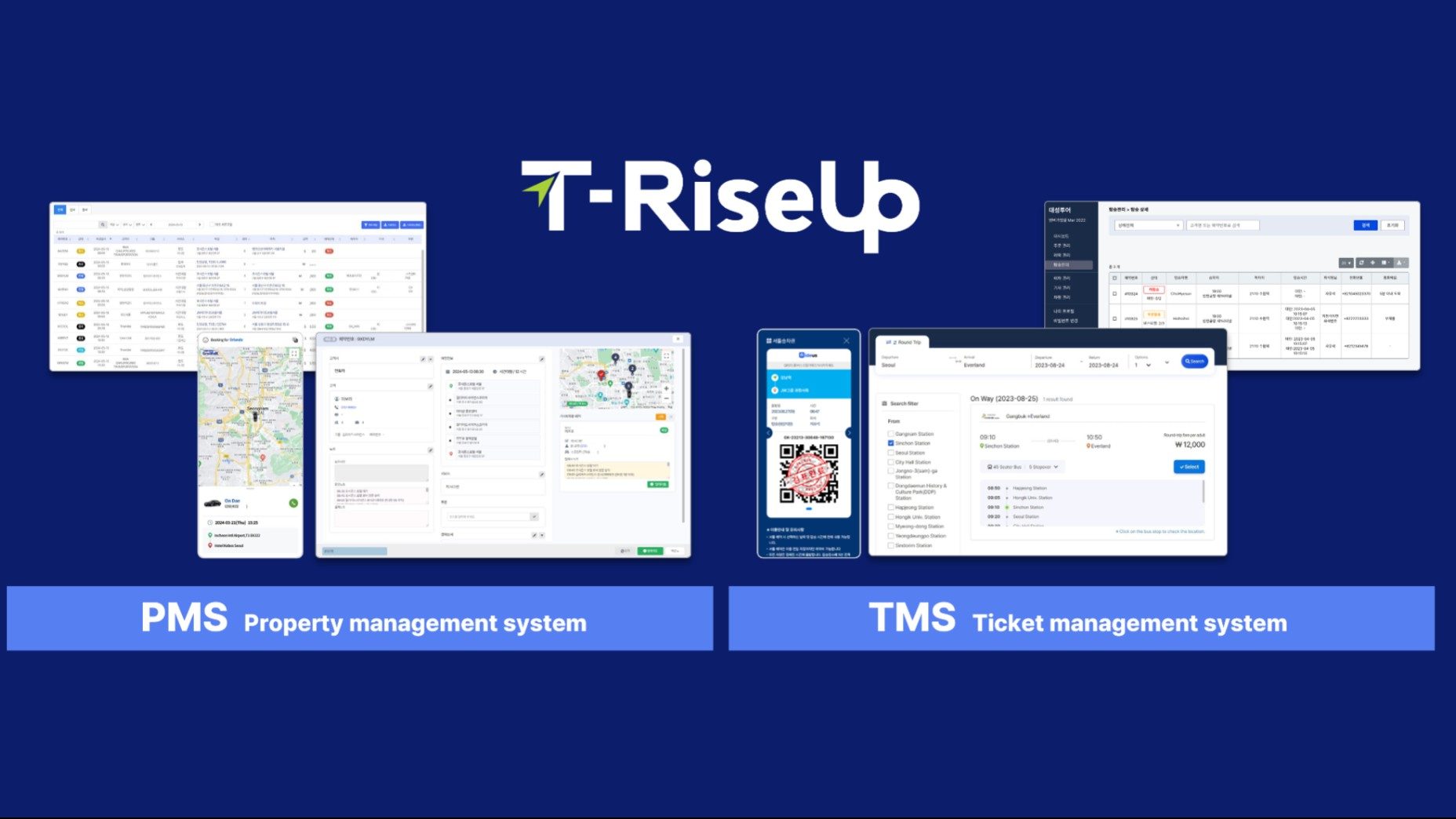
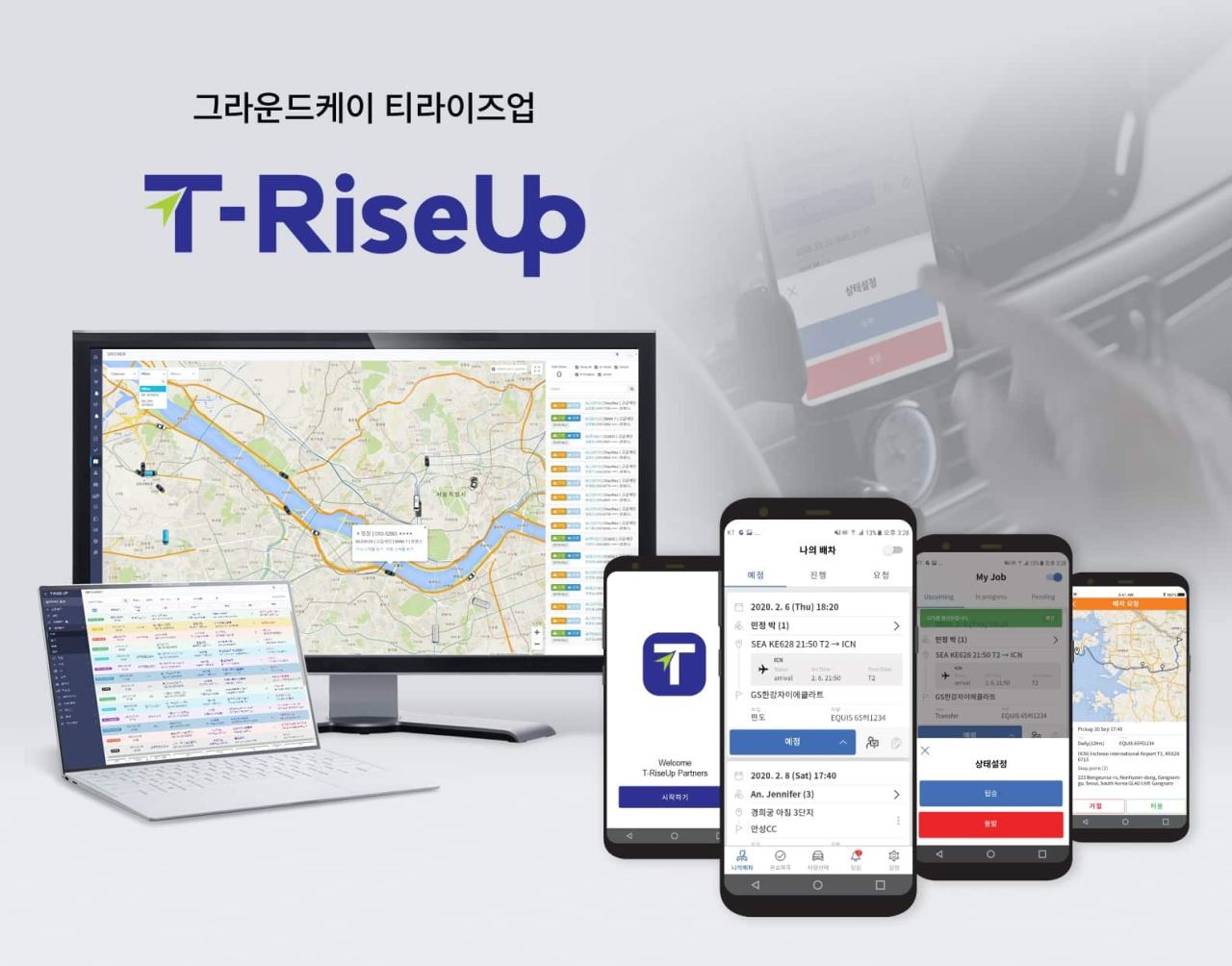
T-RiseUp PMS brings a transport operator's core assets, vehicles, chauffeurs, and clients, into a single managed environment. Once those assets are registered, dispatch, fleet monitoring, and billing no longer need to be handled piecemeal by separate coordinators. The system absorbs the complexity and the per-client variability that make B2B mobility so difficult to manage.
This is more than an efficiency gain. When assets are in the system, quality control becomes possible. Every trip generates a record: which chauffeur, which vehicle, which client, at what time. Those records become the foundation for improving future operations. For corporate buyers, it also means they can require data-backed accountability rather than accepting operations that depend on one person's experience.
T-RiseUp TMS tackles a different problem. A route from point A to point B is intangible as it stands, not a saleable product. TMS structures that route into a legally compliant shuttle service, then packages it as a ticketed product that can be sold directly. It connects route configuration, booking page setup, seat management, and payment processing into one continuous workflow.
Together, the two platforms give a transport operator something that did not exist before: a way to manage and sell their assets and services digitally. Just as a hotel uses Opera to manage rooms, a mobility operator can use T-RiseUp to manage vehicles and routes.
There is no AX without DX first.
As we noted in an earlier insight, AI transformation (AX) requires data to already exist. Many companies in other industries are applying AI to datasets they have accumulated over years, helped in part by advances in computing that make even unstructured data analyzable.
The problem for most transport operators in Korea is that they simply do not have that data. They worked hard, grew their businesses, added routes, and built client relationships. But because all of that happened on paper and over the phone, no record remains. The starting point for AX, the data, is missing.
That is where T-RiseUp enters. When operators run their daily dispatch and fleet management through the platform, data accumulates as a natural by-product: which routes carry the most demand, which time slots run short on vehicles, how passenger patterns shift over time. Digitalization has to come first. AI transformation follows.
We are not trying to get ahead of anyone.
We want to be clear about what GroundK is not doing. We are not positioning ourselves above transport operators and pulling away from them. What distinguishes us is that we started as one of them. We ran the operations, we felt the friction, and we know precisely where the problems originate.
GroundK still operates large-scale event transfers and premium protocol transportation ourselves. At events like MSI 2026, X THE LEAGUE Awards, UCI MTB World Series, and BOF, we use T-RiseUp PMS and TMS in our own operations. We are not a software company selling a tool to the industry from the outside. We are operators who built a tool, use it ourselves, and now offer it to other operators.
Reshaping the structure of the transport industry is not something any single company can do alone. The shift happens when operators who have quietly kept the industry running begin building systems and accumulating data. GroundK wants to be where that change starts.