
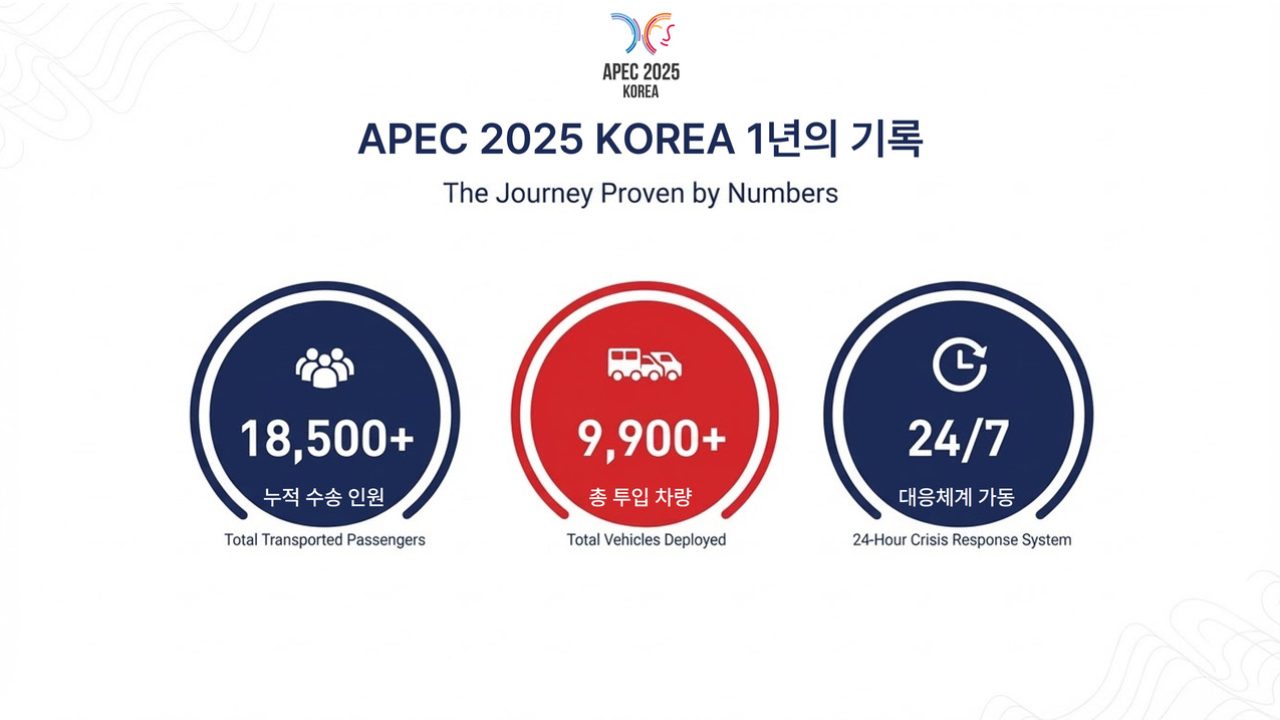
GroundK served as the official transport operator for APEC 2025 KOREA, running every stage from the first ISOM meeting through the closing Summit across roughly one year. Over that period the team moved more than 18,500 passengers with over 9,900 vehicles under a 24-hour crisis-response structure, and during the Summit deployed 300-plus coaches across 25 routes spanning Gyeongju.
APEC 2025 transport, told in numbers
From the opening ISOM meeting to the final Summit, the year GroundK spent on APEC 2025 was defined by its operational scale. The team completed the task of moving more than 18,500 passengers with over 9,900 vehicles, all under a 24-hour crisis-response structure. Behind that work was T-RiseUp PMS, the in-house platform that managed motorcade routing and shuttle operations as one system. The volume of operating experience, and the data gathered along the way, became the clearest evidence of why GroundK can stand alongside organisers of global mega-events.
Why transport decides an international event
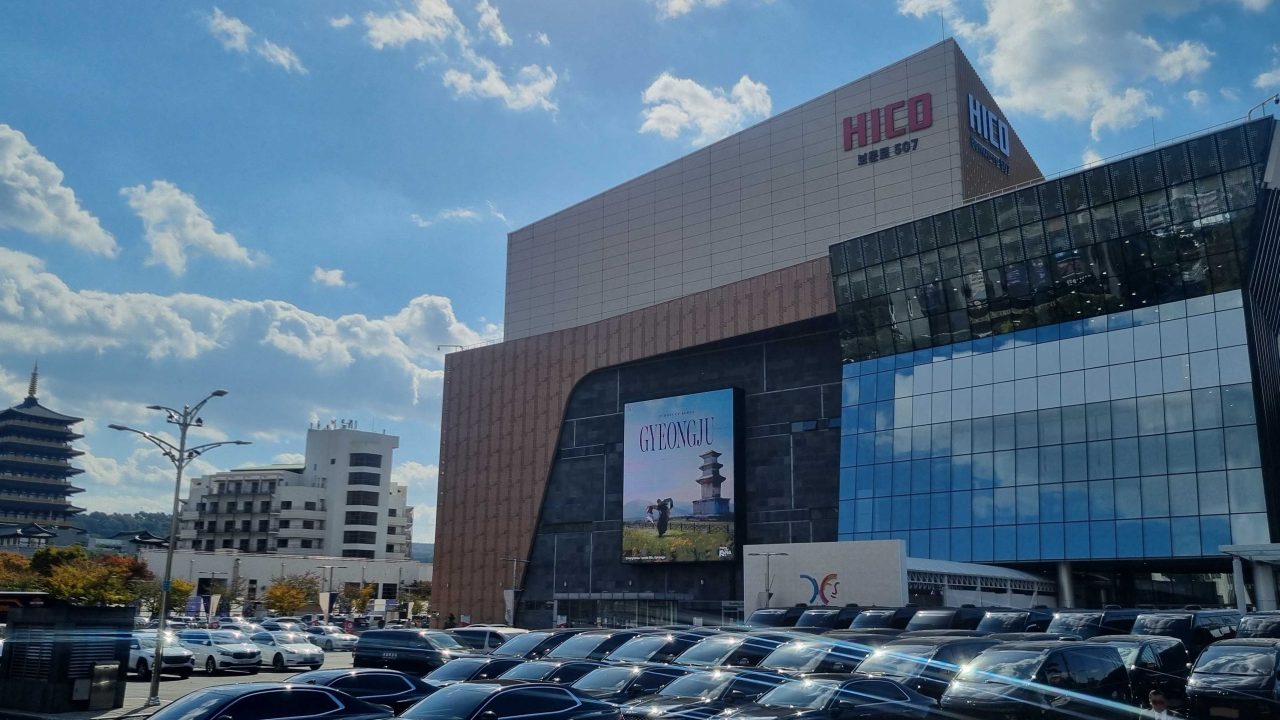
The Asia-Pacific Economic Cooperation (APEC) forum draws attention from around the world, and it is a moment for a host nation to present its standing and its brand. At an event of this scale, transport is more than a way to move people. It is the first face of the service that arriving guests encounter, and a signal of how they are welcomed. As the official transport operator, GroundK added composure to every movement and combined technology with on-site know-how to close the gaps in mobility. The mission was to design transport so completely that participants could focus on the meetings alone.
From ISOM to SOM3, a strategy built stage by stage
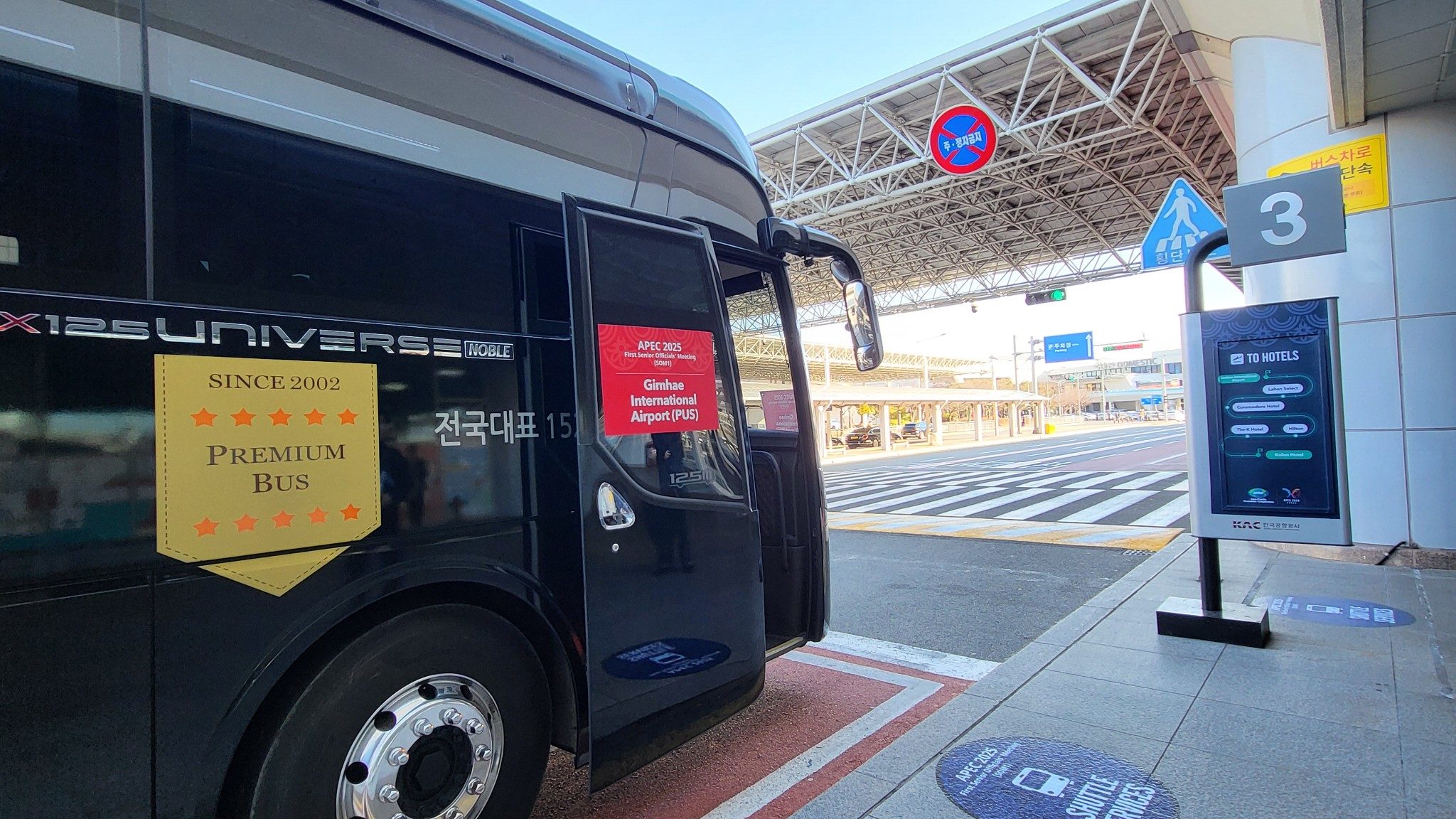
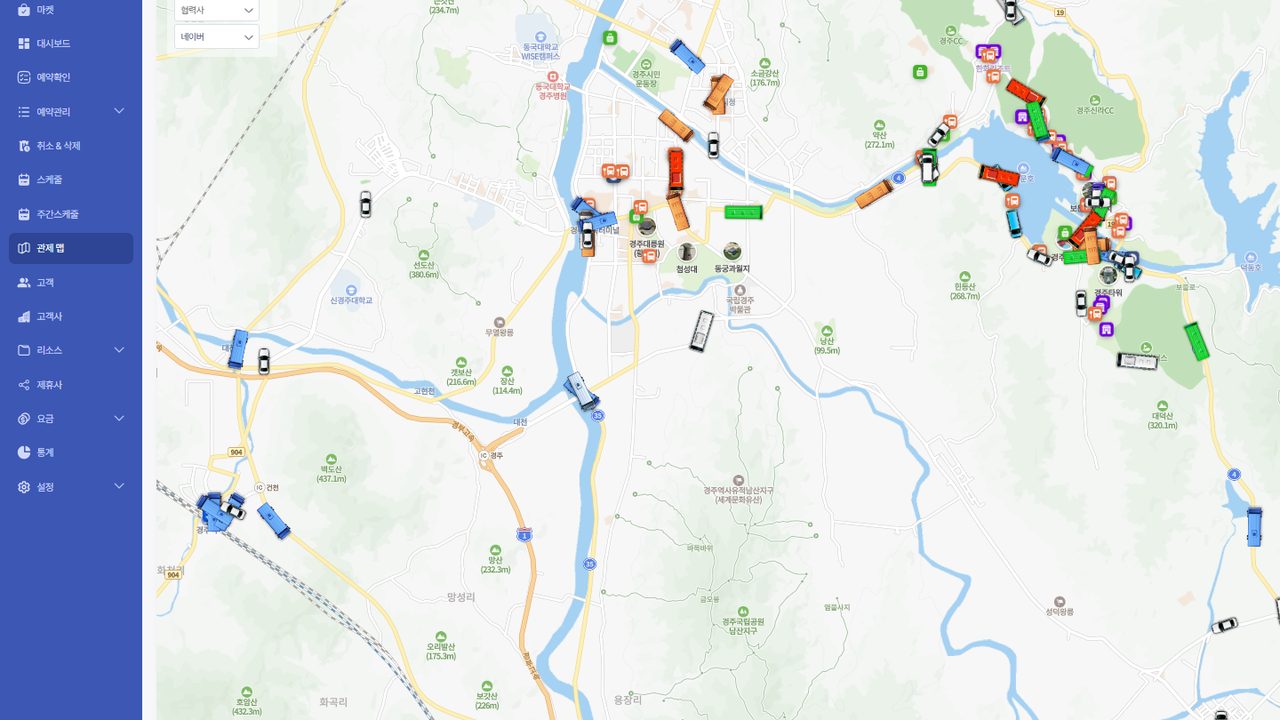
Each phase of APEC carried its own geography and its own operational problem to solve. For SOM1, the team built a wide-area shuttle network linking Gimhae International Airport and KTX stations to overcome the limited transport infrastructure around Gyeongju, and unified all guidance in English for international participants. At the SOM2 meeting in Jeju, the island setting called for a different approach: more than 400 protocol movements were broken down in detail, with dedicated motorcade service for ministerial guests run separately from wide-area shuttles for working staff. At SOM3 and the ministerial meetings that followed, GroundK piloted a control map that visualised movement status stop by stop, so field staff could respond ahead of time based on real-time positions.
The Summit, moving 21 nations and 6,000 people
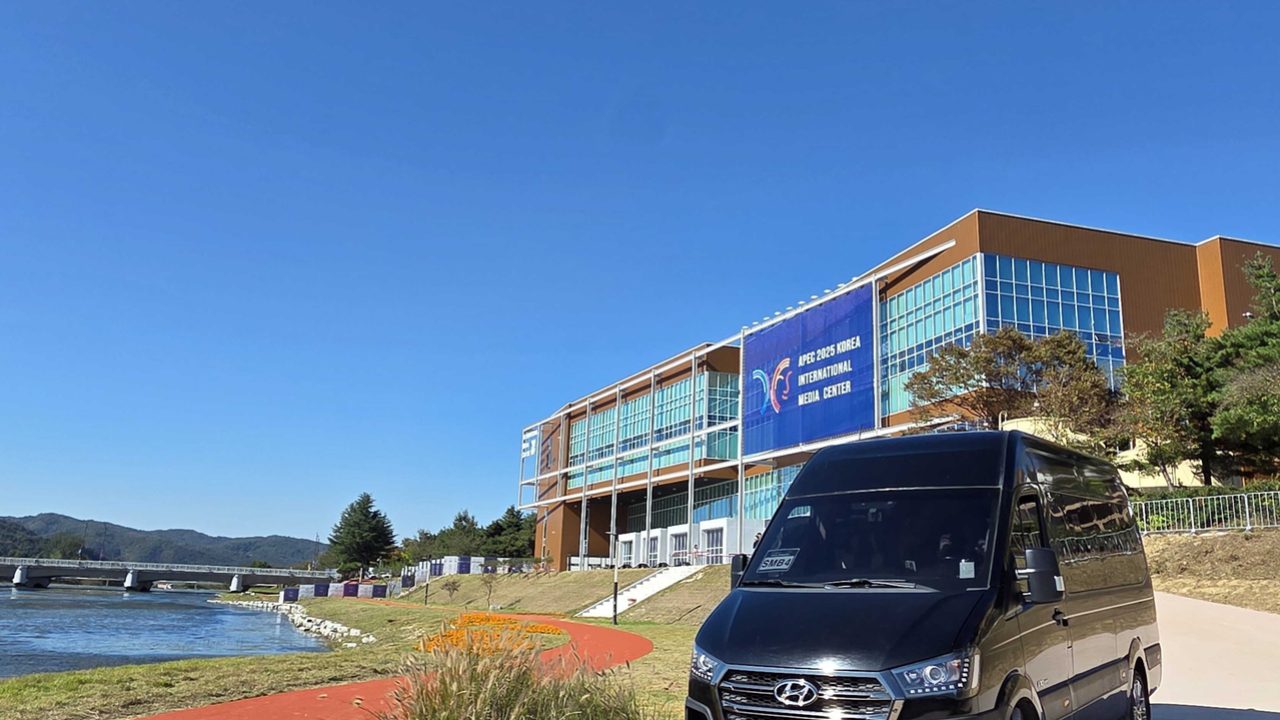
At the Summit, the high point of the APEC 2025 journey, the team faced a setting where more than 6,000 people — heads of state from 21 nations, business leaders and media — moved at the same time. GroundK deployed over 300 coaches across 25 routes reaching every part of Gyeongju, and used RIDEUS to control the running status of all routes in real time for error-free transport. For the press corps, whose work depends on speed, a dedicated route was designed between the International Media Centre and accommodations so reporters were not pressed for time. Hydrogen electric coaches and mobile-office vehicles were also introduced for low-noise, zero-emission transport, letting the sustainability that APEC discusses be felt directly on the ground.
GroundK and T-RiseUp, a mobility standard built on technology
GroundK is an IT-based mobility company that provides transport across MICE, corporate travel and tourism. Rather than simply supplying vehicles, the team manages the entire journey as data through its own digital platform. Its core system, T-RiseUp, is a B2B SaaS platform with PMS and TMS functions covering everything from vehicle dispatch to operations management. That capability has already been proven in VIP transport management at Jeju Dream Tower and in smart shuttle operations at major ski resorts across the country, and it sets a dependable operating standard even in demanding environments.
RIDEUS, the digital brain for moving people at scale
At large mega-events, another core system multiplies what GroundK can do: RIDEUS. RIDEUS is a control platform on which thousands of users can reserve shuttle and tour buses and check their locations in real time. Beyond this APEC Summit, it has delivered wait-free shuttle experiences at sites ranging from resident-only apartment shuttles to the SBS Gayo Daejeon K-pop concert, raising the transparency of operations. With RIDEUS, the team reads boarding status at each location as live data and adjusts dispatch flexibly where congestion is expected, so participants move without stress.
Toward a new standard for global MICE mobility
GroundK is the official transport operator that ran the full course of APEC 2025, from the opening ISOM through the final Summit. The data-driven operating capability and field response proven over a year have become the team's greatest asset and its competitiveness on the global stage. Building on this work, GroundK aims to move past the boundaries of a transport company and set a new standard for global MICE mobility that organisers worldwide trust and use. At the international events and mega-events ahead, the team will be a partner that raises not only the efficiency of movement but the standing of the event itself.