
Kim Seongbok, Chief Strategy Officer of GroundK, came up through the PCO world before pairing on-the-ground domain knowledge with IT. He has spent his career turning MICE transportation — once run on spreadsheets and gut feel — into a domain that can be controlled with data, and he speaks often about the digital transformation (DX) of MICE mobility. Students know him by a fond nickname: "Ssombeoji."
As MICE events grow larger and more complex, transportation is no longer a simple operational detail. It has become a strategic layer that shapes the stability of an event and the experience of its participants. Yet much of the field still leans on personal experience and analog habits. We sat down with Kim to talk about where MICE transportation stands today, where it is headed, and the direction the industry should take.
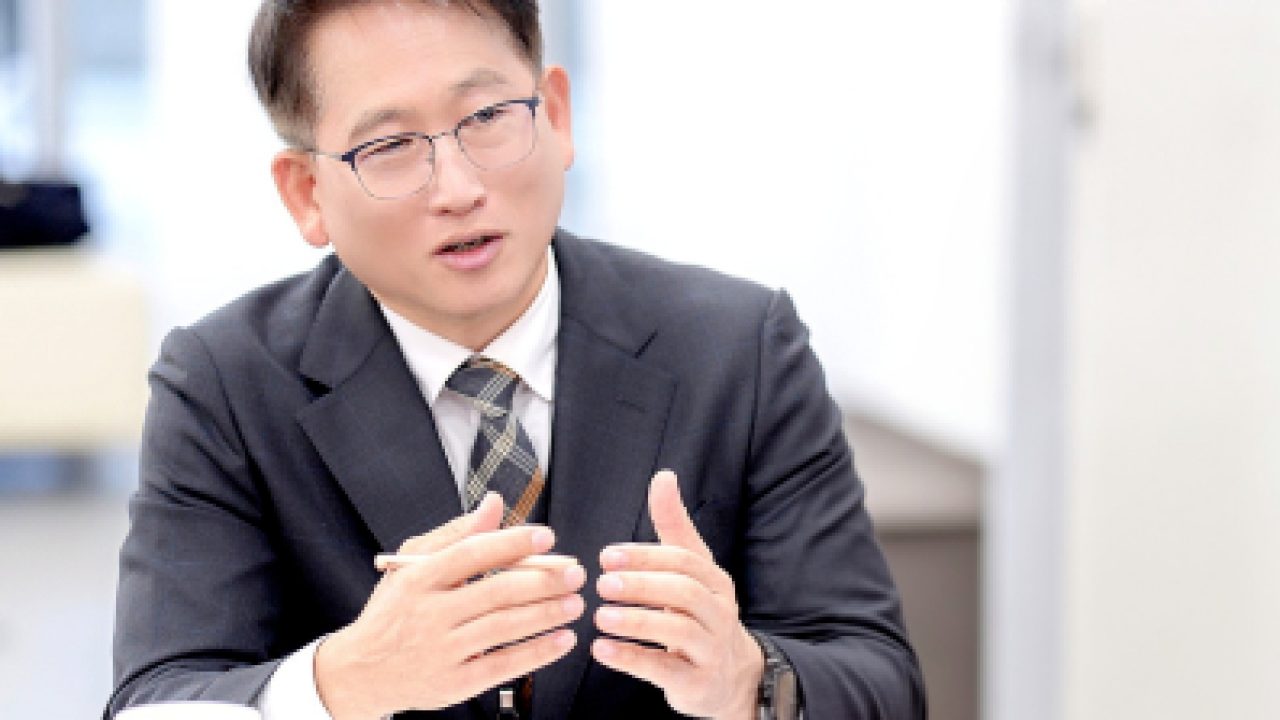
From the PCO floor to a tech strategist
Running international conferences and large events on the ground, Kim says he kept hitting the same wall: a ceiling on scalability. As participant numbers grew, transportation complexity rose exponentially — yet the work was still managed through manual spreadsheets and individual instinct.
"The conviction that drew me here was simple: only when someone who truly understands the field's pain points leads the technical design do you get a solution that actually works." — Kim Seongbok, CSO of GroundK
A labor-intensive structure, he concluded, could never deliver qualitative growth for the MICE industry. The structural problems he diagnosed were an asymmetry of information and the absence of real-time visibility. Transportation has to move in lockstep with protocol, accommodation, and the event schedule, but changes were not synced in real time, creating confusion on the ground. At a summit, where VIP protocol is everything, a transportation error can damage a nation's image — so the human risk that varied with an operator's skill level needed to be brought under systematic control.
T-RiseUp, a Vehicle Management System built for MICE protocol
That problem awareness took shape as T-RiseUp. Kim describes it not as a simple dispatch tool but as a Vehicle Management System (VMS) optimized for MICE protocol. Its core is intuitiveness and standardization: complex protocol scenarios are structured as data, so that even non-technical field staff can step straight into operations. This is the core mechanism for keeping staffing flexible and minimizing human error.
In real-world deployments, the biggest change was operational visibility. At events such as the 2025 APEC Summit and the Korea-Africa Summit, real-time vehicle locations and route data were visualized and monitored from the control center, sharply reducing chronic problems like no-shows and idle waiting time.
"People on the ground told us that transportation had finally entered the realm of predictable management." — Kim Seongbok, CSO of GroundK
Why data-driven operations matter
Transportation has long depended heavily on personal experience and intuition. Data-driven operations, Kim emphasizes, make the basis for decisions explicit and allow potential risks to be anticipated in advance. That goes beyond efficiency — it becomes the foundation for managing the stability and quality of an entire event in a systematic way.
Where transportation once centered on cleaning up after a problem occurred, data-driven decision making lets teams forecast bottlenecks ahead of time and defend against risk proactively. As global events multiply, Kim argues, this approach is no longer optional but essential — a precondition that enables not just cost savings but genuine quality control across the whole event.
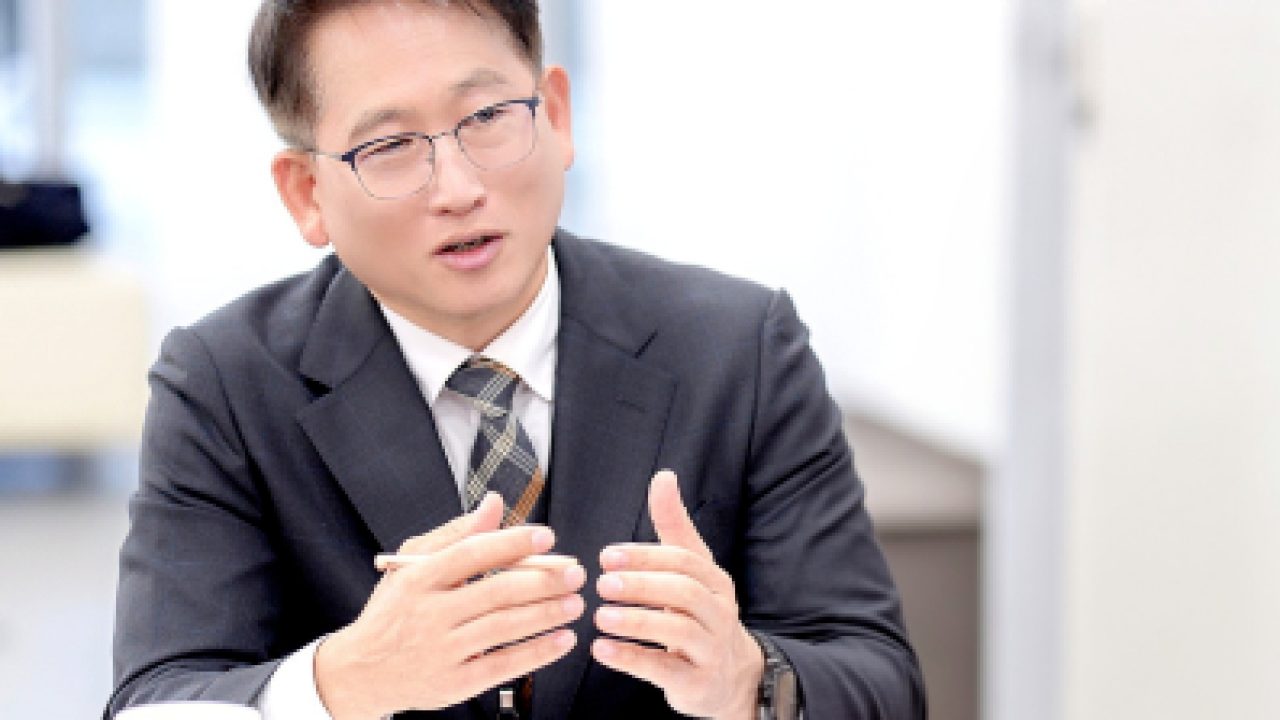
Beyond DX to AX: an AI strategy for MICE transportation
The next step, Kim says, is to move beyond automation into intelligence. AI algorithms are already being used to compute optimal multi-point routes, learn from past data to forecast demand, and simulate scenarios for sudden disruptions.
"Here, AI does not replace the operator. It functions as a powerful decision support tool that assists and sharpens human judgment." — Kim Seongbok, CSO of GroundK
His work also extends to the ecosystem. Through the MICE Tech Alliance (MITA), Kim is leading collaboration among technology companies. From the client's point of view, he argues, technology should be an integrated experience rather than a set of fragmented features. MITA connects the technologies of each vertical — registration, accommodation, transportation, tourism — into a single, uninterrupted process through API integration and the like. It is a strategic body that aims not merely at the survival of individual firms but at growing the entire MICE tech ecosystem and setting its standards.
The mentor they call "Ssombeoji"
The sustainability of the industry, Kim stresses, ultimately rests on people. The field can only endure if talent that deeply understands operations and can put technology to proper use grows alongside it. For more than two decades he has run practice-focused classes for aspiring MICE professionals at training institutes, universities, and academies. He is especially active as a mentor for S.O.M., the national university MICE student club, staying in close touch with students. The nickname they gave him — "Ssombeoji" — is a sign of just how much practical, immediately applicable advice he shares.
The same philosophy runs through his message to younger planners. The early years bring plenty of repetitive, demanding work, and that experience becomes a valuable asset for planning — but the process need not be needlessly inefficient. Technology, he says, shortens that time and frees planners to focus on the substance of their work.
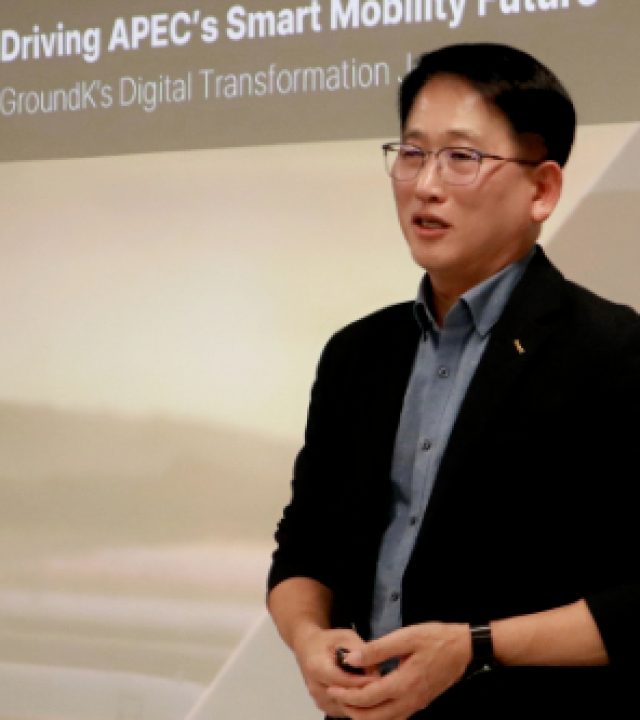
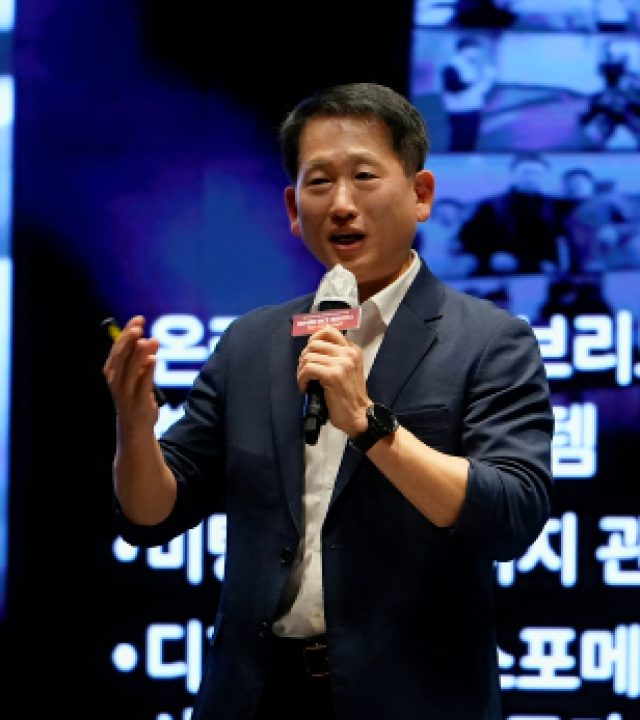
The future of MICE transportation, as Kim sees it
Transportation, in his view, is no longer something to be fixed but a core area that creates an event's competitive edge. Korea has already built world-class operational experience through numerous large international events, and if that experience is structured and standardized through technology, it can readily become a global benchmark.
"GroundK will keep connecting the field's complex operational experience with technology, turning transportation from a back-office function into a differentiated core competency. Beyond that, our ultimate goal — mine and GroundK's — is to establish a 'K-MICE mobility standard' through an advanced technology platform and export it to the global market." — Kim Seongbok, CSO of GroundK