”Sombeoji” (The Father of S.O.M.): Seong-bok Kim, CSO of GroundK

2026.01.05

As the MICE industry becomes larger and more complex, “Transportation” is no longer a simple operational element. It is establishing itself as a core strategic infrastructure that determines the overall stability of the event and the participant experience. Despite this importance, transportation operations in the field still often rely on personal experience and analog practices.

Seong-bok Kim, Chief Strategy Officer (CSO) of GroundK, who has integrated IT technology with domain knowledge accumulated in the field as a former PCO, is solving these issues through technology and presenting new standards for MICE mobility operations. Having converted uncertain transportation sites into data-controllable areas, he has consistently presented strategies for the Digital Transformation (DX) of MICE transportation and the industry's future.

We met with CSO Kim to hear about the present and future of MICE transportation operations and the direction the industry should pursue.

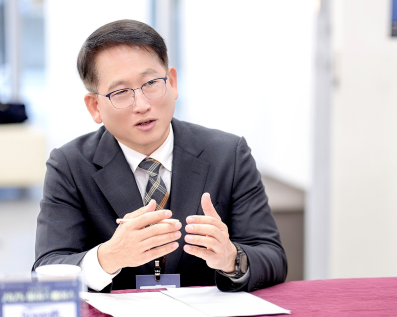
  • CSO Seong-bok Kim is being interviewed. [Photo=GroundK]

    CSO Seong-bok Kim is being interviewed. [Photo=GroundK]

Limitations of Experience-Dependent Operations and Technical Solutions

Q. You transitioned from a PCO in the field to a strategist (CSO) at a tech company. What is the background of this career pivoting?

A. While operating or observing many international conferences and large-scale events, I felt the “limitations of scalability.” As the scale of participants grows, the complexity of transportation increases exponentially, yet management was still relying on manual Excel entries and personal “intuition.” I judged that qualitative growth in the MICE industry would be impossible with such a labor-intensive structure. The conviction that an effective solution only emerges when someone who truly understands the field's pain points leads the technical design brought me here.

Q. What were the structural problems of existing MICE transportation operations you felt in the field?

A. The biggest problems were “information asymmetry” and the “absence of real-time capability.” Transportation must work organically with protocol, accommodation, and event schedules, but changes were not synchronized in real-time, causing confusion on-site. Especially in summits where VIP protocol is key, transportation errors can directly lead to a tarnished national image. There was a need to control the “human risk,” which has a high variance depending on the operator's skill level, through a system.

  • CSO Seong-bok Kim explains future smart mobility at the Gyeongju APEC site. [Photo=GroundK]

    CSO Seong-bok Kim explains future smart mobility at the Gyeongju APEC site. [Photo=GroundK]

Achievements and Strategies: Efficiency Proven by Data

Q. Can we say this problem-solving approach was implemented through “T-RiseUp”?

A. Yes. T-RiseUp is not just a simple dispatch tool, but a Vehicle Management System (VMS) optimized for MICE protocols. The key is “intuitiveness” and “standardization.” By structuring complex protocol scenarios into data, it is designed so that even field personnel who are not IT experts can be deployed immediately. This is a core mechanism that secures flexibility in manpower operations and minimizes human error.

Q. What changes occurred in actual international event application cases?

A. Securing “Visibility” of operations at the 2025 APEC Summit and the Korea-Africa Summit was the greatest achievement. By visualizing and monitoring real-time vehicle locations and route data at the control center, we drastically reduced chronic issues like no-shows and idle waiting times. Field officials evaluated it by saying, “Transportation has finally entered the realm of predictable management.”

Q. Why do you think “data-driven operation” is important in MICE transportation?

A. Until now, transportation operations have relied heavily on individual experience and senses. However, data-driven operation clarifies the basis for judgment and allows for the pre-prediction of potential risks. This goes beyond simply increasing operational efficiency and becomes the foundation for systematically managing the stability and quality of the entire event.
If past transportation focused on post-incident management, Data-Driven Decision Making allows for the pre-prediction of bottleneck sections and proactive defense against risks. As global events increase, this approach is not an option but a necessity, and it is a key prerequisite that enables quality control across the entire event beyond cost reduction.

Ecosystem and the Future: Leadership in Connection and Expansion

Q. We are entering the AI Transformation (AX) era beyond DX. What is the AI utilization strategy for MICE transportation?

A. Now we must move beyond automation to the stage of intelligence. We are moving toward calculating multi-point optimized routes through AI algorithms, predicting demand by learning past data, and simulating sudden situation scenarios. Here, AI does not replace the operator but functions as a powerful Decision Support Tool that assists and refines human judgment.

Q. You are leading the solidarity between tech companies through the “MICE Tech Alliance (MITA)”...

A. From the customer (organizer) perspective, technology should be an “integrated experience” rather than “fragmented functions.” MITA is an attempt to connect technologies in each vertical area—registration, accommodation, transport, tourism—into one seamless process through API integration. This is a strategic consultative body that grows the entire MICE tech ecosystem pie and establishes standards beyond individual company survival.

Q. It is impressive that you are also focusing on nurturing next-generation talent.

A. The sustainability of the industry ultimately depends on “people.” Talent who deeply understands the field and can properly utilize technology must grow together for the industry to persist. For over 20 years, I have been conducting practical-oriented education for prospective MICE talent at training centers, universities, and various academies. Specifically, I am communicating with students as a mentor for the national university MICE club “S.O.M.” Among the students, I am called by the nickname “Sombuji” (S.O.M. Father), which likely means I share a lot of realistic advice that can be applied immediately in the field.

  • CSO Seong-bok Kim is active as a mentor for the national university MICE club “S.O.M.” [Photo=GroundK]

    CSO Seong-bok Kim is active as a mentor for the national university MICE club “S.O.M.” [Photo=GroundK]

Q. What message do you want to convey most to junior planners?

A. There will be a lot of repetitive and difficult work at the beginning, but that experience eventually becomes an important asset for planning. However, I don't think that process needs to be unnecessarily inefficient. Technology reduces that time and helps focus on the more essential planning.

Q. What does the future of MICE transportation envisioned by CSO Seong-bok Kim look like?

A. Transportation is no longer an “object of problem-solving” but is becoming a key area that creates the competitiveness of an event. Korea has already accumulated world-class operational experience through numerous large-scale international events. If we structure and standardize this experience through technology, it can sufficiently become a global standard. GroundK will continue its role in connecting complex field operational experience with technology, transforming transportation from a “back-office task” into a “Core Competency.” Furthermore, my ultimate goal, along with GroundK, is to establish the “K-MICE Mobility Standard” through an advanced technology platform and export it back to the global market.

#GROUNDK#SeongbokKim#CSO#MICEExpert#MobilityStrategist#MICEMobility#TRiseUp#RIDEUS#VMS#VehicleManagementSystem#SmartMobility#MobilityPlatform#MICETech#DigitalTransformation#MICE#MITA#MICETechAlliance#KMICE#MobilityDX